
Apple Cider Butterscotch Sourdough Bread
As an Amazon Associate, I earn from qualifying purchases.
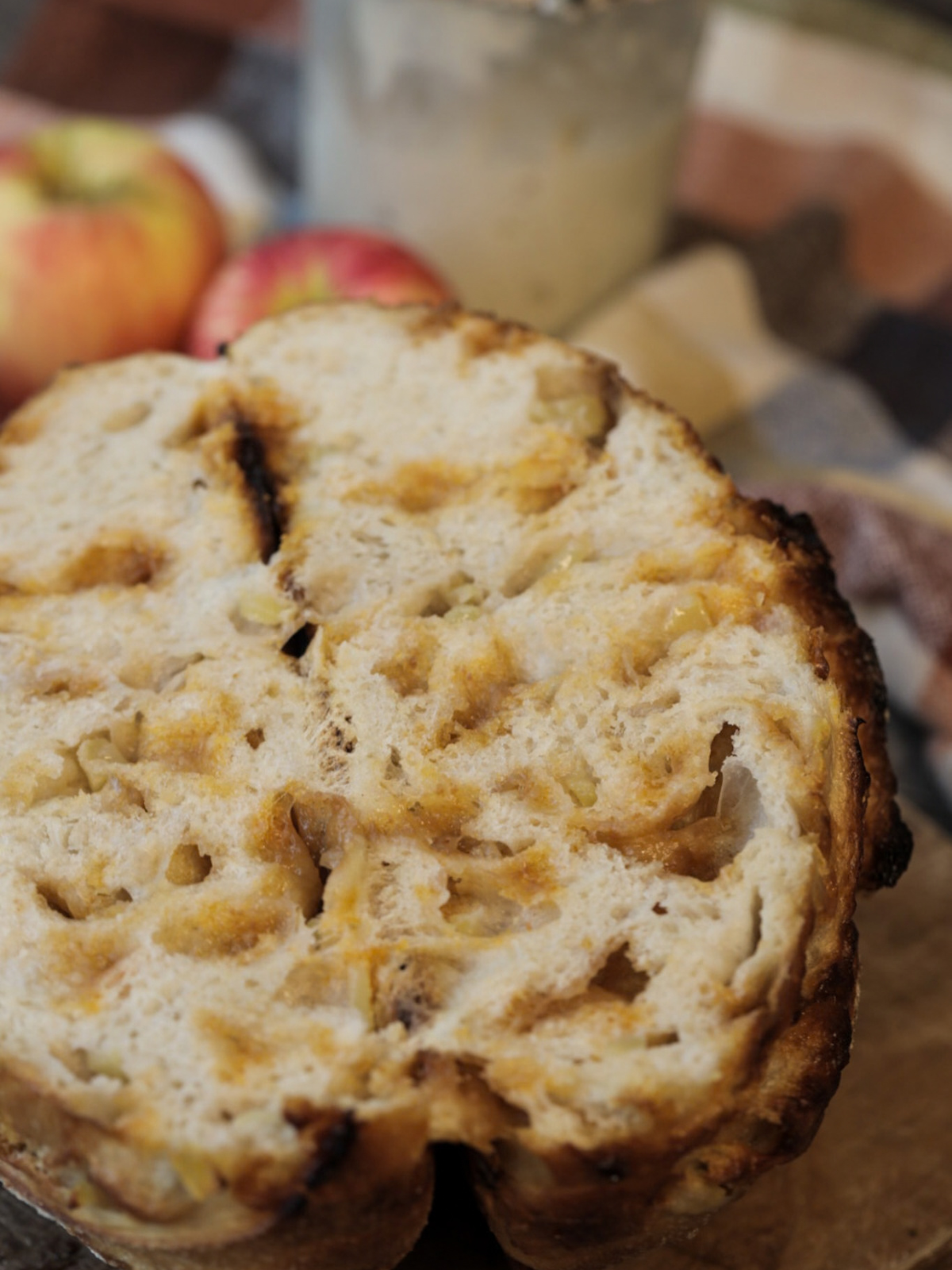
I substituted reduced apple cider in place of some of the water in this Sourdough Apple Cider Butterscotch Sourdough Bread, and the result was incredible! Sprinkle in some butterscotch chips, and you have a simple and sweet fall-flavored loaf of crusty sourdough bread.
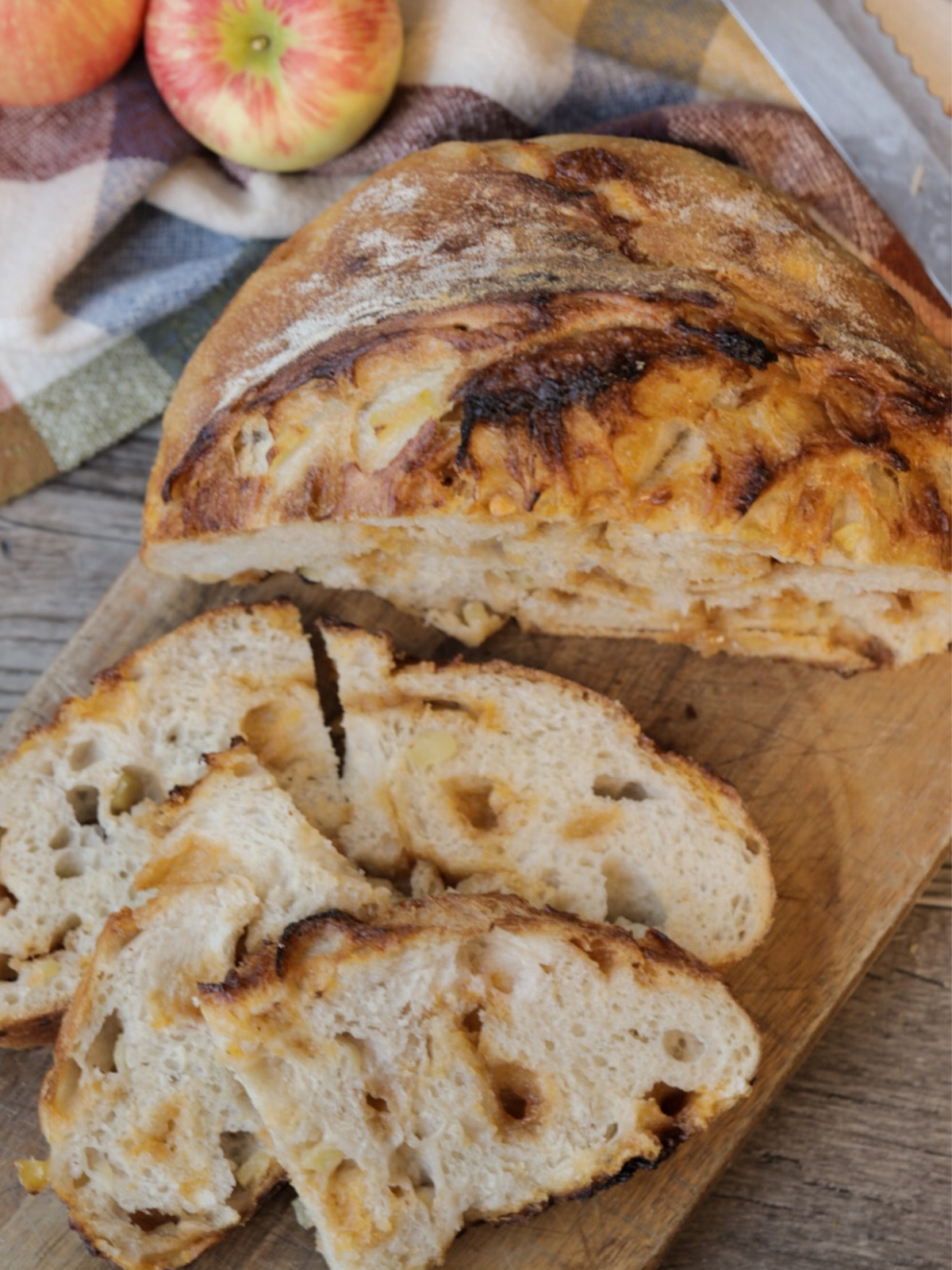
How can I list all the ways I love this apple cider and butterscotch sourdough bread? It is a quintessential autumn-flavored sourdough loaf of bread. It is naturally fermented, while still being a sweet dessert.
It’s fantastic freshly baked with or without butter. It would make a lovely base for your weekend French toast, French toast bake, or bread pudding. Oh, could you imagine an apple butterscotch bread pudding with salted caramel sauce?! ….I think I need to make this now.
Anyway, you’re going to love this sourdough recipe. If you’re looking for a unique sourdough bread recipe, this one’s for you!
Why You’ll Love This Reduced Apple Cider Butterscotch Sourdough Bread
- Packed with fall flavor: Reduced apple cider gives the loaf a concentrated apple flavor that pairs perfectly with sweet butterscotch.
- Naturally fermented: This recipe uses active sourdough starter for a flavorful, chewy artisan-style loaf.
- Sweet and tart: Fresh chopped apple adds little bursts of juicy, slightly tart flavor throughout the bread.
- Perfect for autumn baking: Apple cider, apples, and butterscotch make this an especially cozy loaf for fall.
- A fun twist on classic sourdough: The sweet inclusions make this bread feel special while still keeping the texture and crust of homemade sourdough.
Looking for more apple or pumpkin recipes? Check these out!
- sourdough discard apple cider donuts
- sourdough apple coffee cake
- sourdough apple cream cheese kolaches
- sourdough pumpkin donuts with maple glaze
- sourdough apple pie focaccia
Step-By-Step Instructions
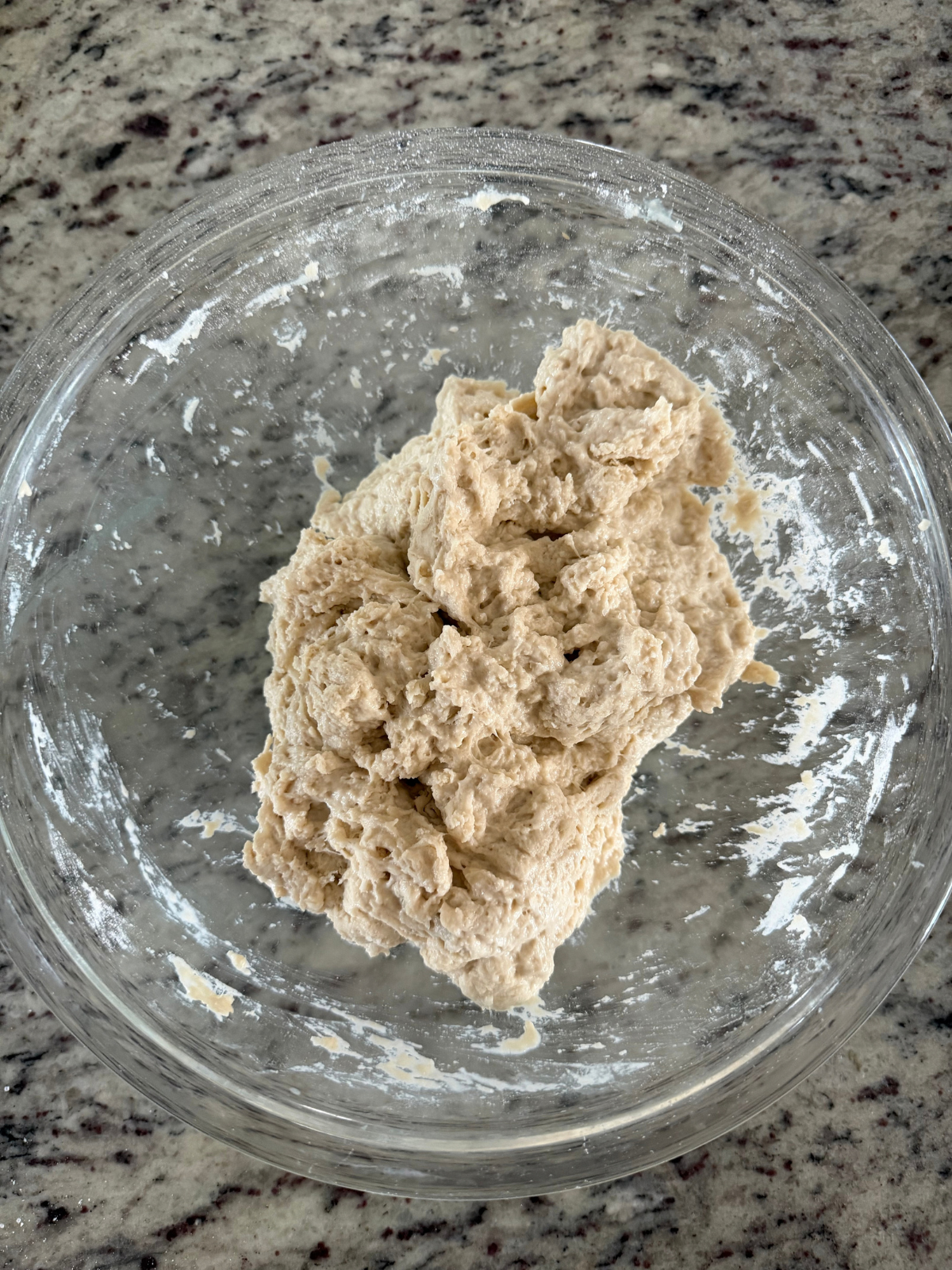
Reduce the Cider & Mix the Dough
Simmer 150 g apple cider until reduced to 65 g, then cool completely. Mix the reduced cider with the starter, water, bread flour, and salt until a shaggy dough forms.
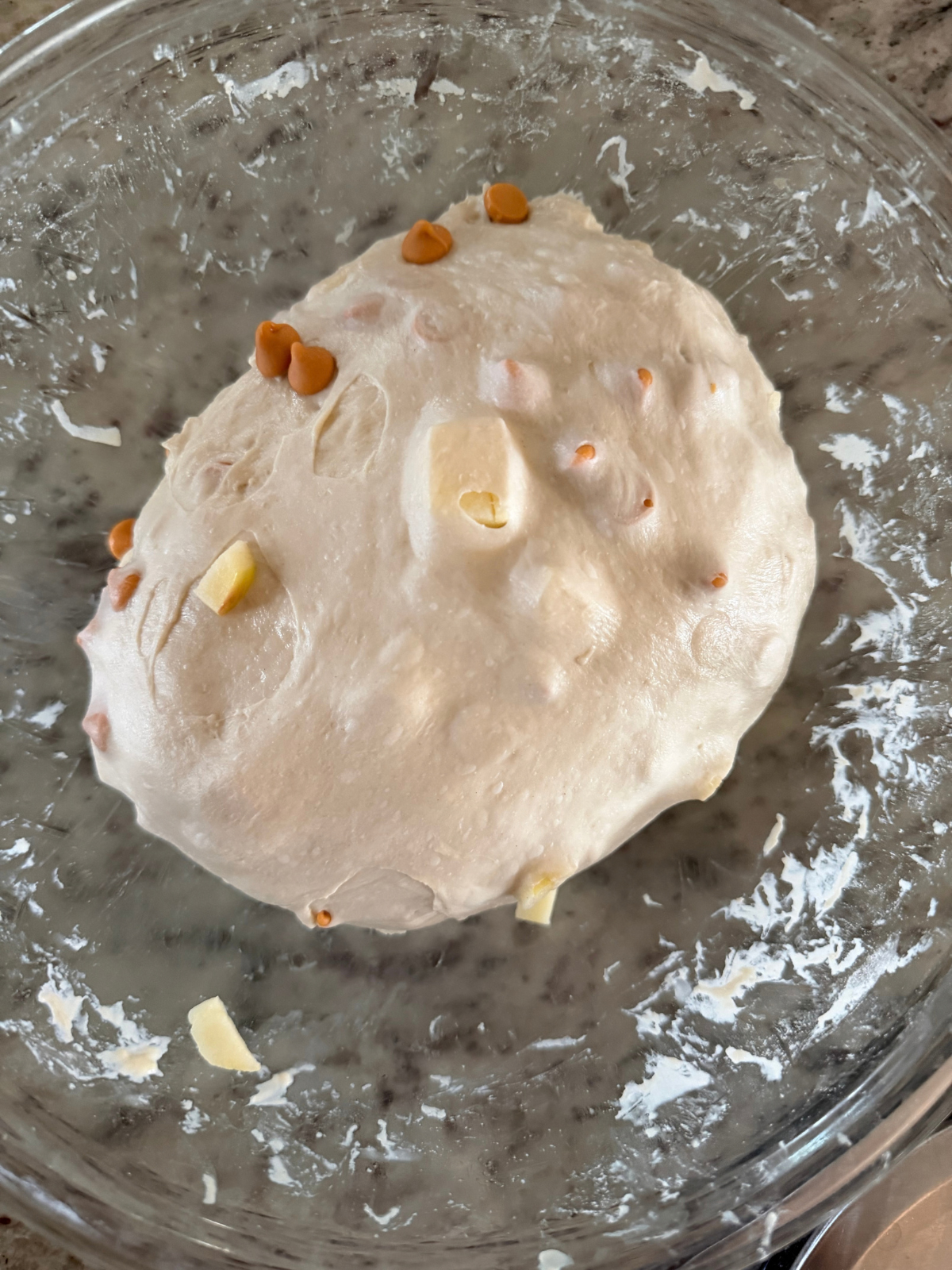
Stretch, Fold & Add the Inclusions
Perform 3–4 sets of stretch and folds about 30 minutes apart. During the second or third set, gently fold in the chopped apple and butterscotch chips.
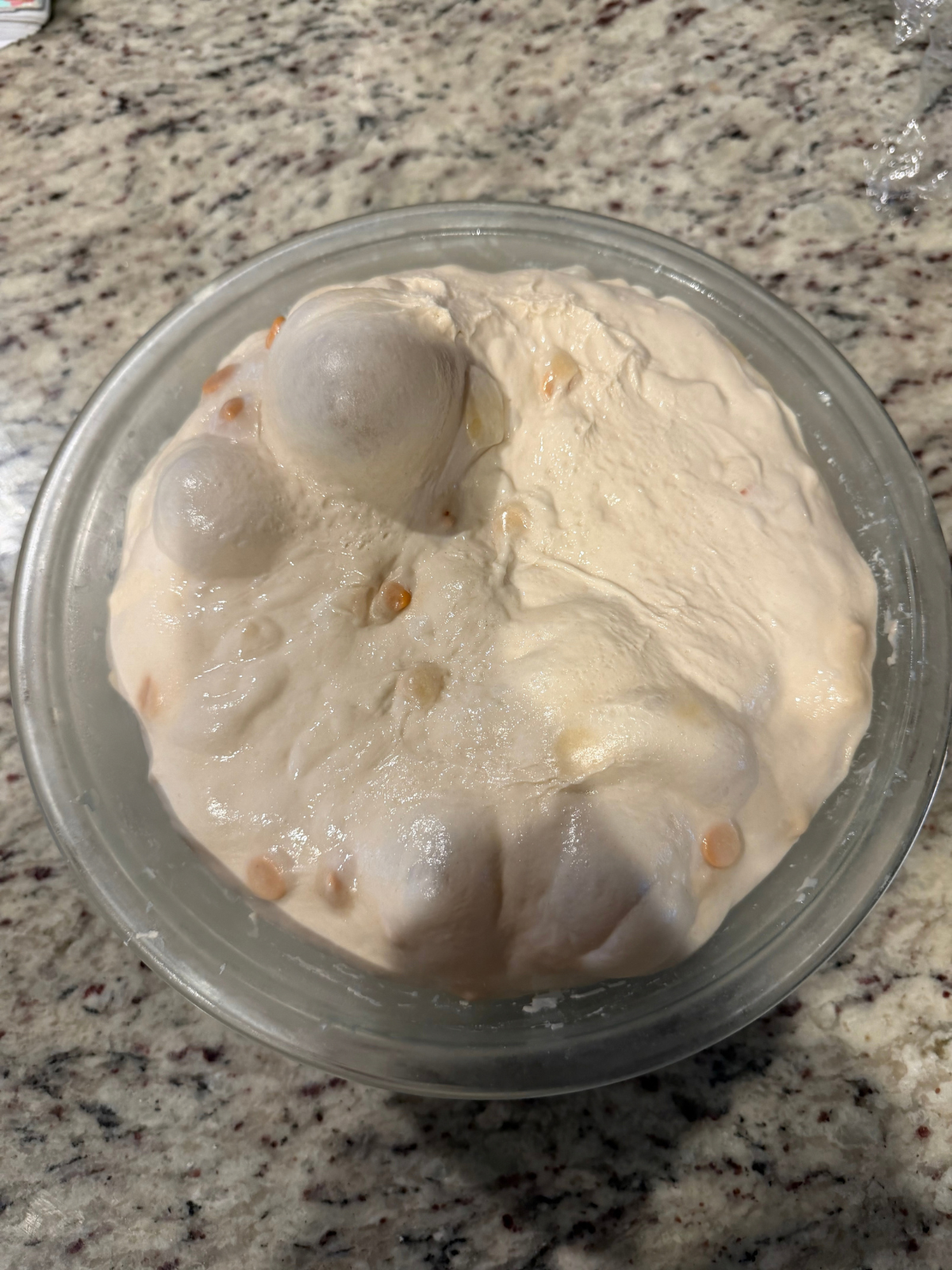
Bulk Ferment & Shape
Let the dough bulk ferment until it has risen about 50–75% and looks airy. Shape into a tight boule, then place seam-side up in a rice-floured banneton, cover, and refrigerate overnight.
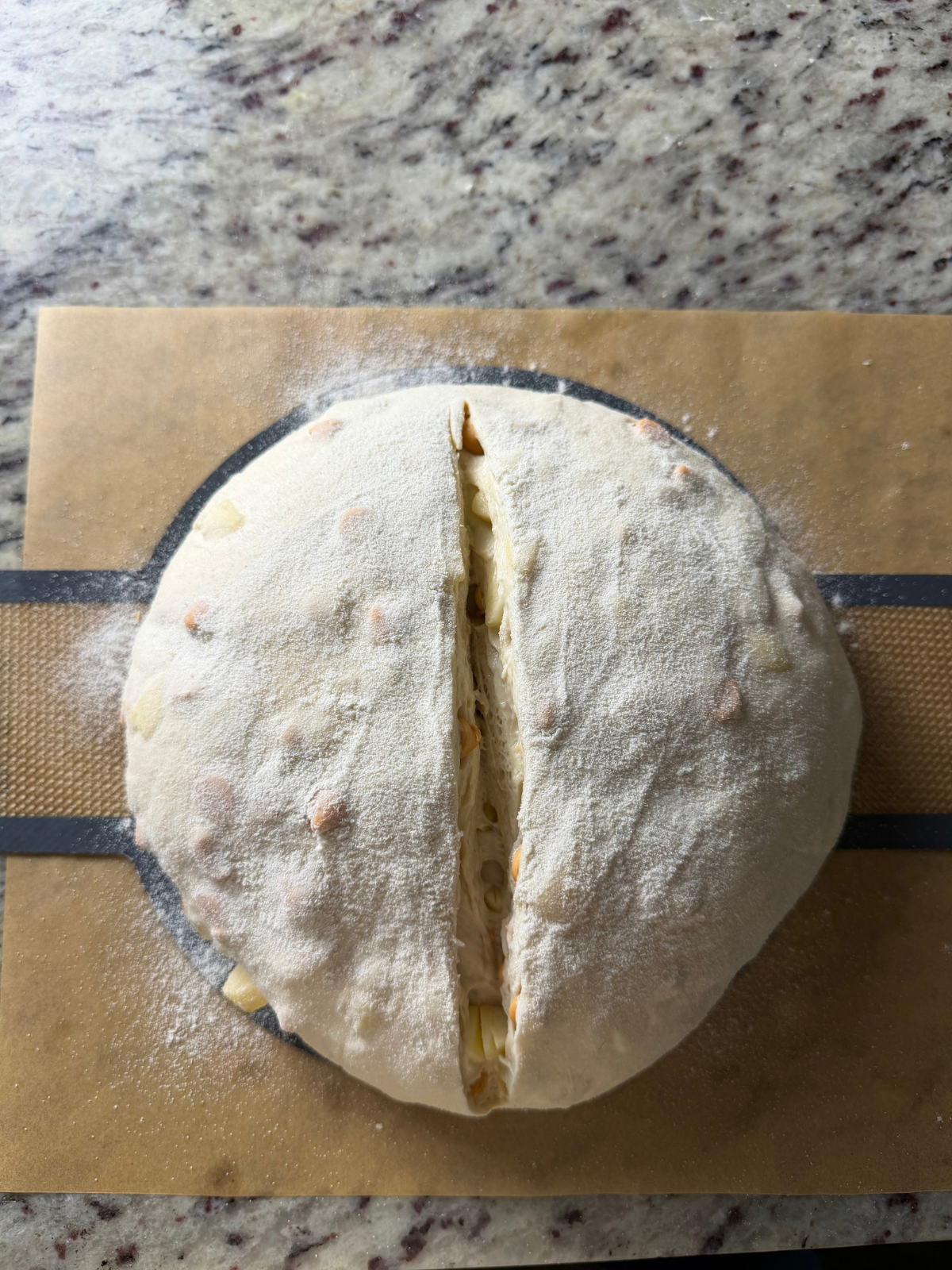
Score & Bake
Turn the dough onto parchment and a bread sling, score the top, and place it into a preheated Dutch oven. Bake at 450°F for 30 minutes covered, then 15–20 minutes uncovered, until the internal temperature reaches about 200°F.
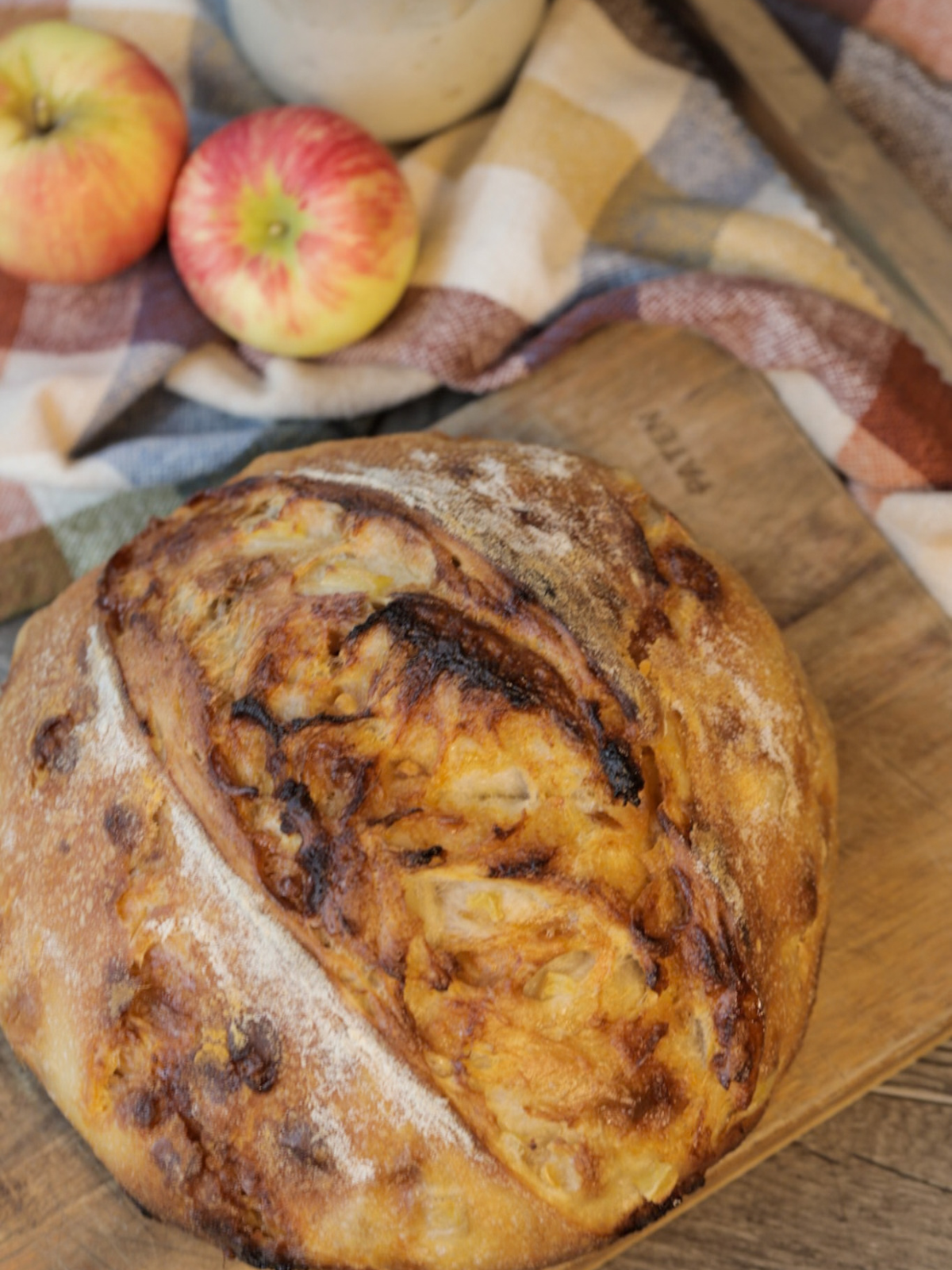
Tips for the BEST Apple Cider Butterscotch Sourdough Bread
- Cool the reduced cider completely: Adding warm cider can speed up fermentation and make the dough harder to control.
- Use small apple pieces: Chop the apple fairly small so it distributes evenly and doesn’t create large wet pockets in the crumb.
- Add inclusions during the folds: Incorporate the apples and butterscotch chips during the second or third stretch and fold so the dough has time to build strength first.
- Watch the dough, not the clock: Bulk fermentation can vary widely depending on room temperature and starter strength, so look for a 50–75% rise and a light, airy dough.
- Protect the bottom from burning: Because the loaf contains sugar from the cider, apples, and butterscotch, use parchment and a bread sling, and add uncooked rice beneath the loaf if your Dutch oven runs hot.
Equipment
- Large mixing bowl
- Small saucepan
- Digital kitchen scale
- Dough whisk or wooden spoon
- Bench scraper
- Banneton or proofing basket
- Rice flour, for dusting
- Parchment paper
- Bread sling, optional
- Bread lame or sharp razor blade
- Dutch oven with lid
- Instant-read thermometer
- Wire cooling rack
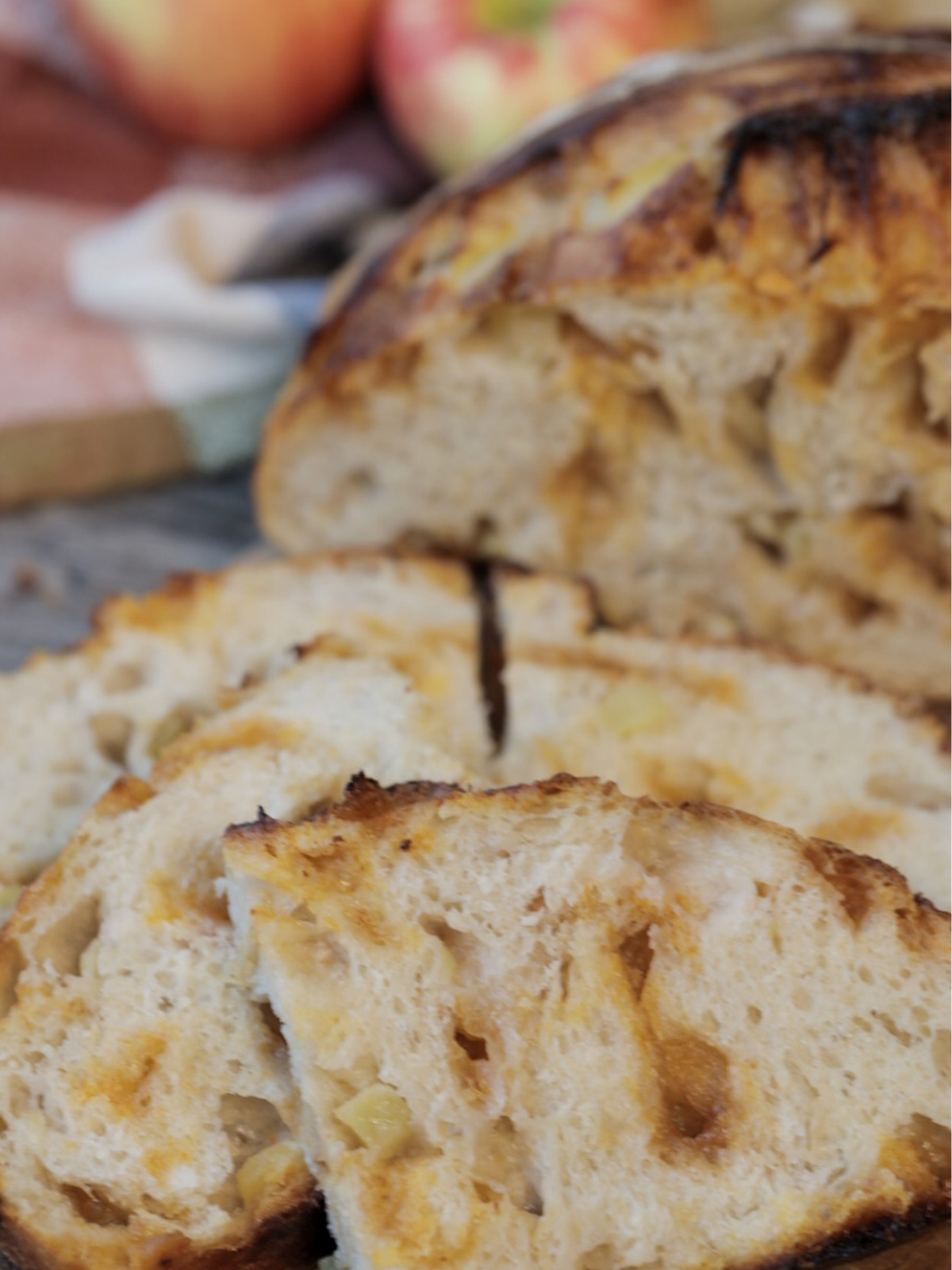
Storage
Store the cooled Apple Cider Butterscotch Sourdough Bread in an airtight container or bread bag at room temperature for up to 2–3 days.
For longer storage, slice the loaf and freeze it in a freezer-safe bag or container for up to 3 months. Thaw slices at room temperature or warm them in the toaster or oven before serving.
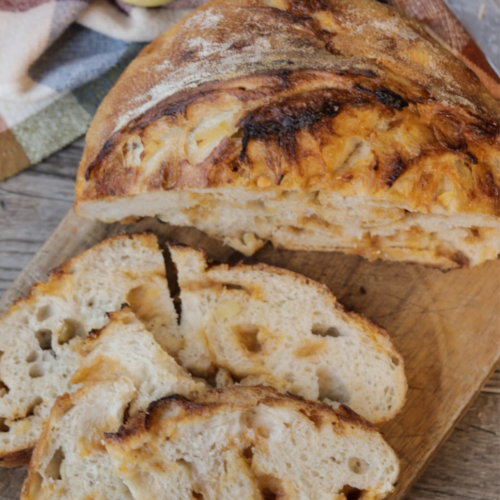
Apple Cider Butterscotch Sourdough Bread
Ingredients
- 100 g active sourdough starter about 1/2 cup
- 65 g reduced apple cider cooled, about 1/4 cup, you'll start with 150g or 2/3 cup of apple cider before cooking it
- 240 g water about 1 cup
- 450 g bread flour about 3 3/4 cups
- 10 g salt about 1 3/4 teaspoons
- 170 g butterscotch chips 1 cup
- 1 medium apple peeled, cored, and chopped into small pieces, about 1 cup; I prefer honeycrisp apples–make sure you pat the apples dry to remove excess juice
Instructions
Reduce the Apple Cider
- Add 150 g (about 2/3 cup) apple cider to a small saucepan. Bring to a gentle simmer over medium to medium-low heat.
- Continue simmering, stirring occasionally, until the cider has reduced to approximately 65 g (about 1/4 cup). The cider should become slightly thicker and more concentrated in flavor. This generally takes around 10–15 minutes, depending on the size of your saucepan and heat level.
- Remove from the heat and allow the reduced cider to cool completely before adding it to the dough.
Mix the Dough
- In a large mixing bowl, combine the active sourdough starter, cooled reduced apple cider, water, bread flour, and salt.
- Mix until all of the flour is hydrated and a shaggy dough forms. Cover the bowl and allow the dough to rest for about 30 minutes.
Stretch and Fold
- Perform a set of stretch and folds by gently pulling one side of the dough upward and folding it over itself. Rotate the bowl and repeat on all four sides.
- Repeat the stretch-and-fold process every 30 minutes for approximately 3–4 sets.
- Peel and finely chop the apple. Use a paper towel to pat the apples dry. Set aside until you're ready to add during stretch and folds.
- During the second or third set of stretch and folds, gently add the butterscotch chips and chopped apple. Spread a portion of the inclusions over the dough, fold the dough over them, and continue adding and folding until they are evenly incorporated.
Bulk Ferment
- Cover the dough and allow it to bulk ferment at room temperature until it has increased in size by approximately 50–75%, looks airy, and has visible bubbles around the sides and surface.
- Bulk fermentation time will vary based on the temperature of your kitchen and the strength of your starter.
Shape the Dough
- Turn the fermented dough onto a lightly floured work surface.
- Gently shape the dough into a round by folding the edges toward the center. Flip the dough seam-side down and use your hands or a bench scraper to gently pull the dough toward you, creating surface tension.
- Rotate the dough and repeat until you have a smooth, tight boule. Avoid pressing too aggressively so you do not squeeze out the fermentation gases.
Place in the Banneton
Preheat the Dutch Oven
- The following day, preheat your oven to 450°F (232°C) with the Dutch oven inside.
- Allow the Dutch oven to preheat thoroughly before baking.
Score the Bread
- Remove the dough from the refrigerator and carefully turn it out of the banneton onto a piece of parchment paper.
- Place the parchment and dough onto a bread sling if using.
- Score the top of the loaf with a bread lame or sharp razor blade to allow controlled expansion while baking.
Bake
- Carefully lower the bread into the hot Dutch oven.
- If you are using a Dutch oven with a dark bottom that tends to cause the bottom of your bread to burn, you can place a layer of uncooked rice underneath the parchment or bread sling to create an additional barrier from the direct heat.
- Cover with the lid and bake at 450°F (232°C) for 30 minutes with the lid on. Remove the lid and continue baking for another 15-20 minutes, or until the crust is deeply golden brown and the internal temperature is 200°F (93°C).
Cool
- Carefully remove the bread from the Dutch oven and transfer it to a wire cooling rack.
- Allow the loaf to cool completely before slicing so the crumb can finish setting.


Great recipe. I used cinnamon chips because I did not have butterscotch chips. Directions were clear and easy to follow. Favorite amongst friends and family.
Cinnamon chips sound like such a lovely addition! I am so glad the bread was enjoyed!!