Sourdough Orange Rolls (Soft Brioche Recipe!)
As an Amazon Associate, I earn from qualifying purchases.
These 100% Sourdough Brioche Orange Rolls are packed with fresh orange flavor thanks to the fresh orange zest in the dough, the filling, and the cream cheese frosting. And let’s talk about that cream cheese frosting–because that too is orange-flavored thanks to the fresh-squeezed orange juice (from all those oranges you’re zesting!). Perfect for the holidays and Christmas morning.

I tested this recipe multiple times to make sure that they were perfect. And it definitely took some trial and error. I tried so hard to put orange juice *into* the dough, but it just wasn’t happening.
Orange juice is acidic and messed with the dough’s fermentation every time. So that’s why you’ll see the orange juice in the cream cheese frosting only (believe me, it’s for the best).
I sure hope you love these as much as my family did! I know orange rolls are a classic Christmas morning staple, and what makes them even better is that they are naturally fermented! Absolutely no yeast here–only naturally fermented sourdough.
Why You’ll Love These Sourdough Orange Rolls
- Soft and Fluffy Texture: Made with an enriched sourdough dough, these orange rolls bake up incredibly soft, fluffy, and tender with a delicious buttery texture.
- Bursting with Fresh Orange Flavor: Fresh orange zest in the dough and filling, along with a sweet and tangy orange cream cheese frosting, gives every bite a bright, refreshing citrus flavor.
- Perfect for Making Ahead: With an optional 12–24 hour refrigerated rest, these sourdough orange rolls can easily fit into your schedule. They’re perfect for holiday mornings, weekend brunches, or preparing ahead for special occasions.
More Sourdough Recipes to Check Out!
- sourdough brioche cinnamon rolls
- sourdough strawberry cheesecake rolls
- sourdough lavender honey sweet rolls

How to Make Sourdough Orange Rolls
In a stand mixer fitted with the dough hook, combine the active sourdough starter, warm milk, eggs, bread flour, salt, sugar, and orange zest.
Mix until a shaggy dough forms. Gradually add the softened butter, then knead on medium-high speed for 8–10 minutes until smooth and elastic.
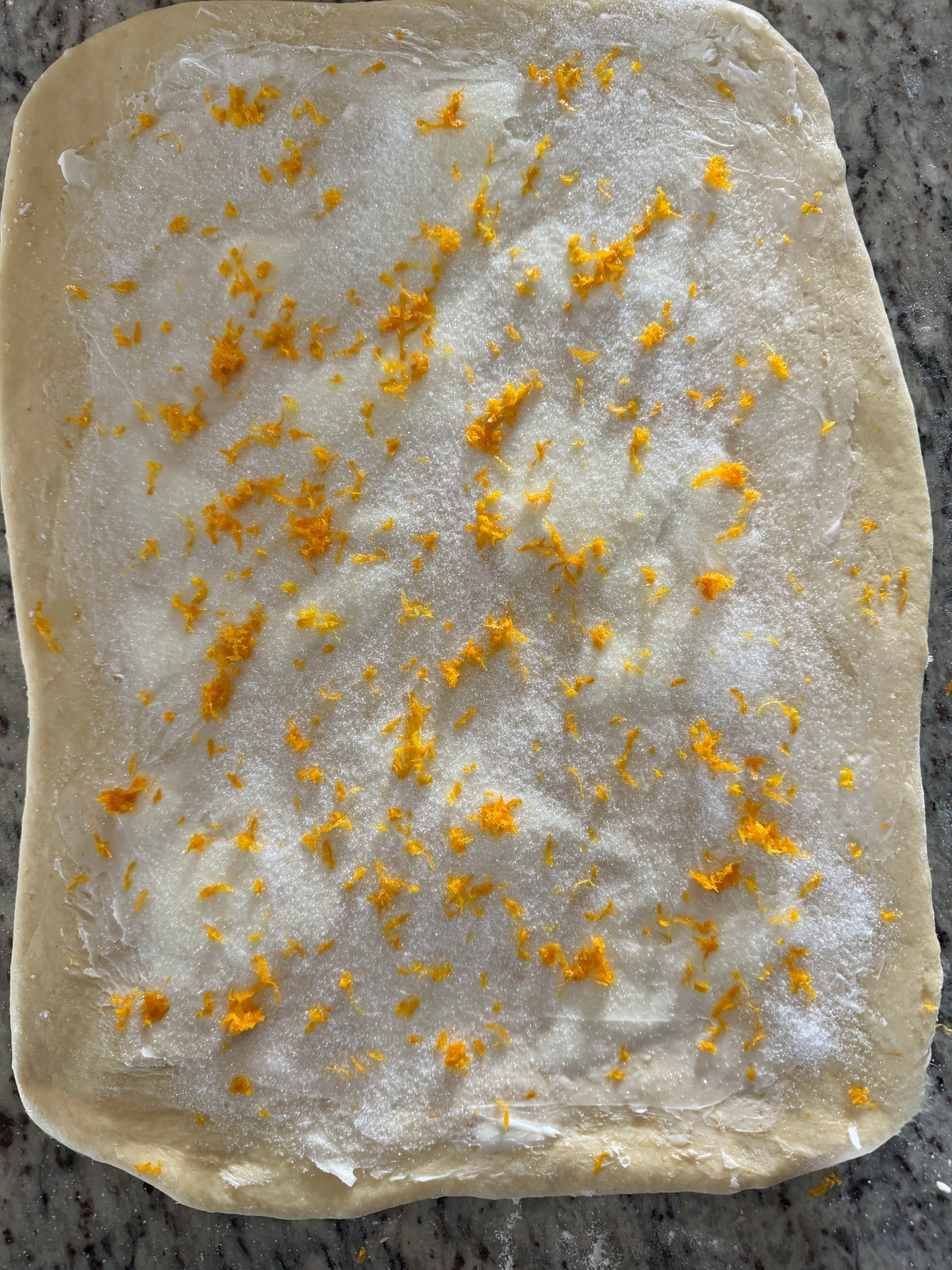
Turn the dough onto a lightly floured surface and roll into a 12 × 18-inch rectangle. Mix the softened butter, granulated sugar, and orange zest, then spread evenly over the dough.
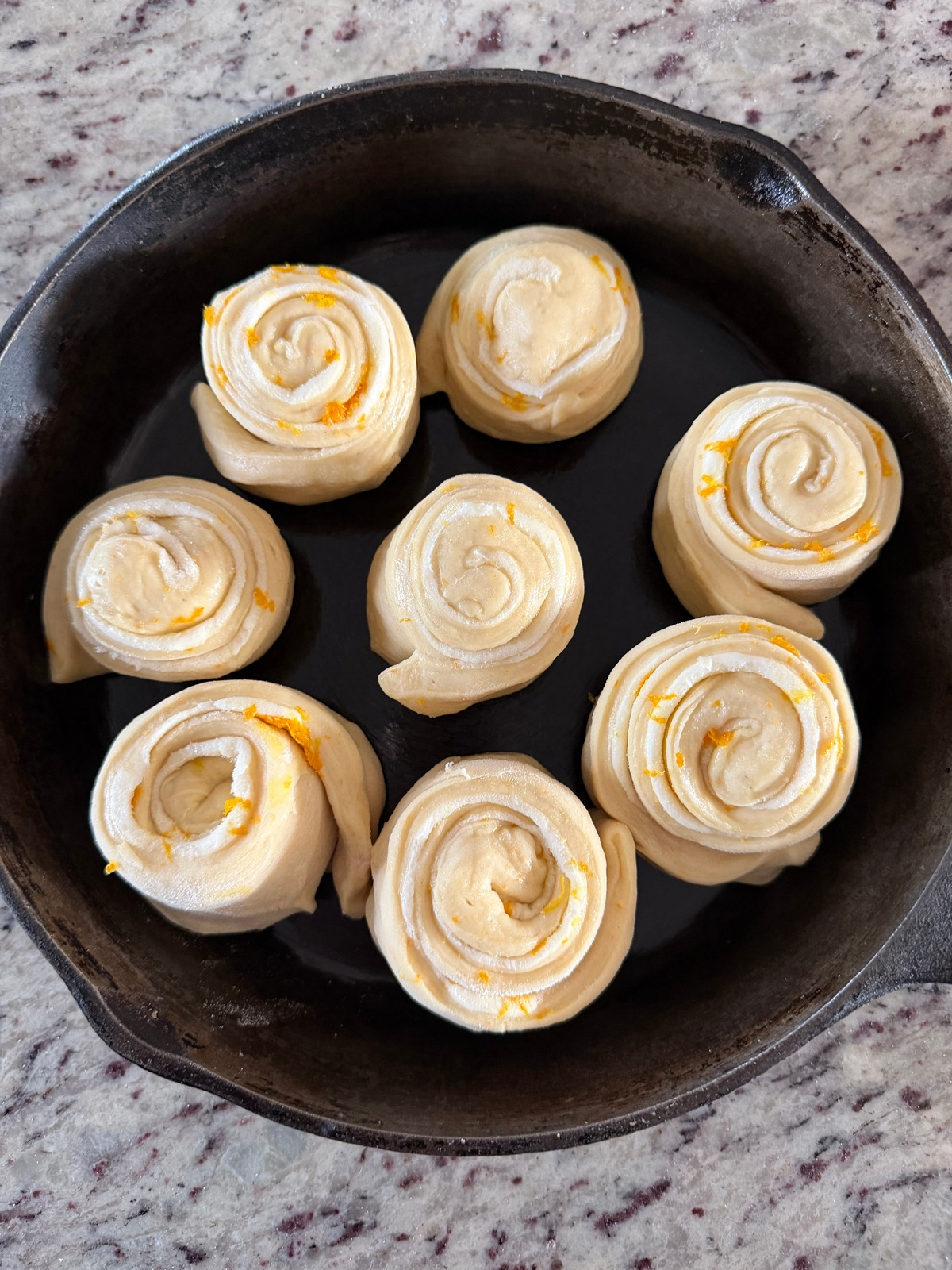
Cut the dough into 8 equal strips and roll each strip into a spiral. Arrange the rolls in a greased cast iron skillet or round baking dish.
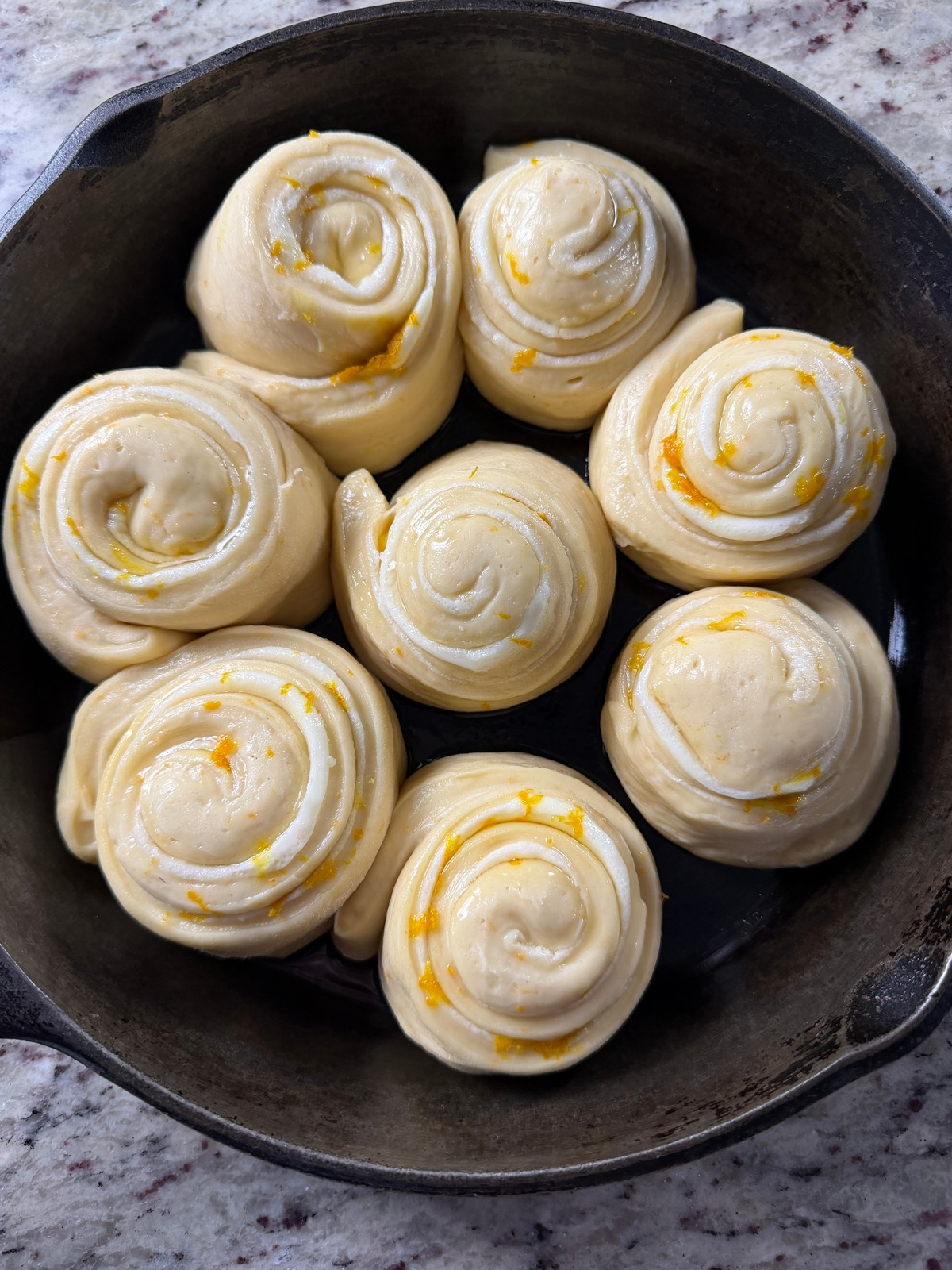
Cover and allow to rise until noticeably puffy and expanded, approximately 2–4 hours or longer if needed.
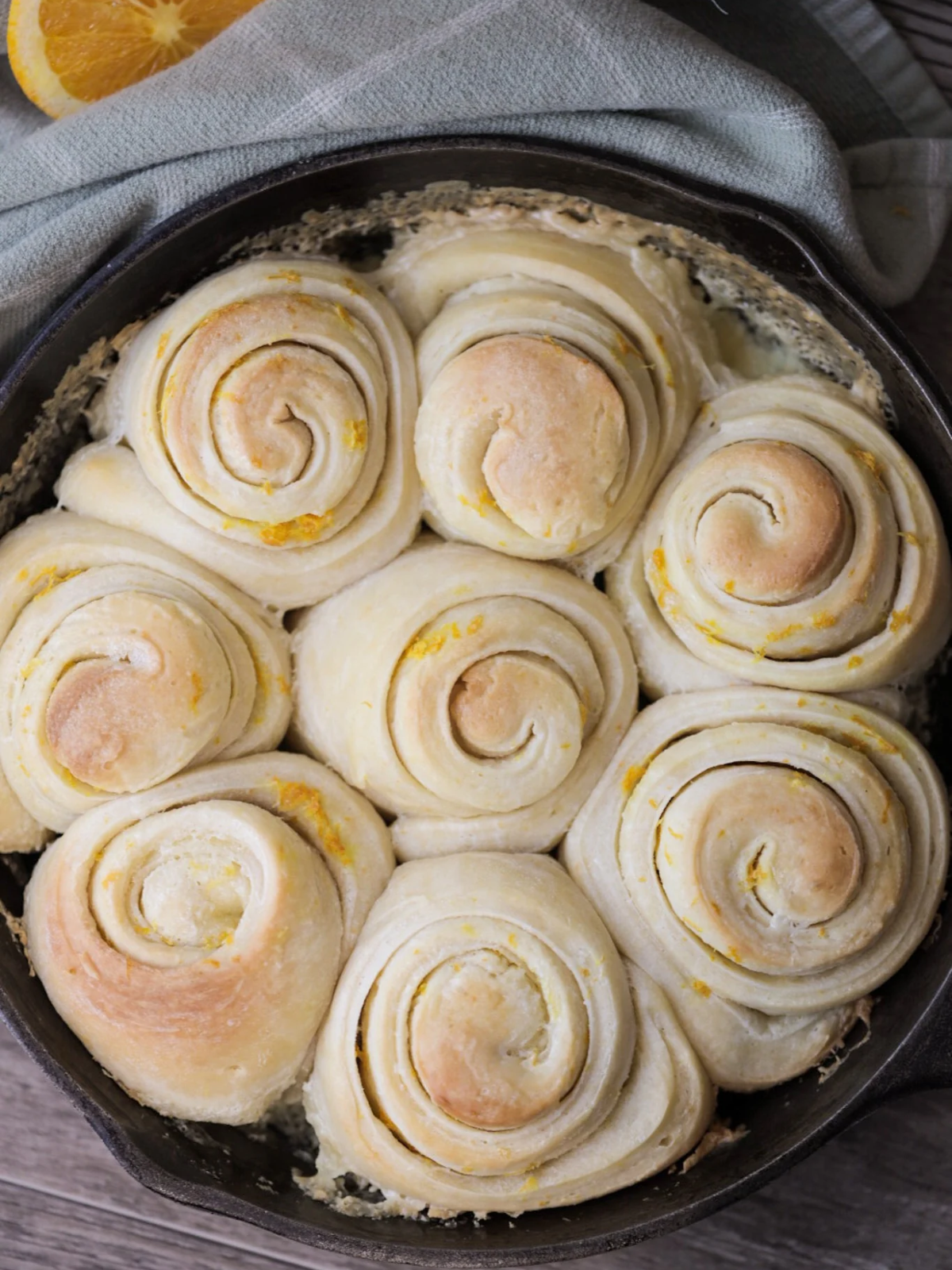
Pour the optional heavy cream over the rolls and bake at 350°F (175°C) for 30–35 minutes, or until golden brown and baked through.
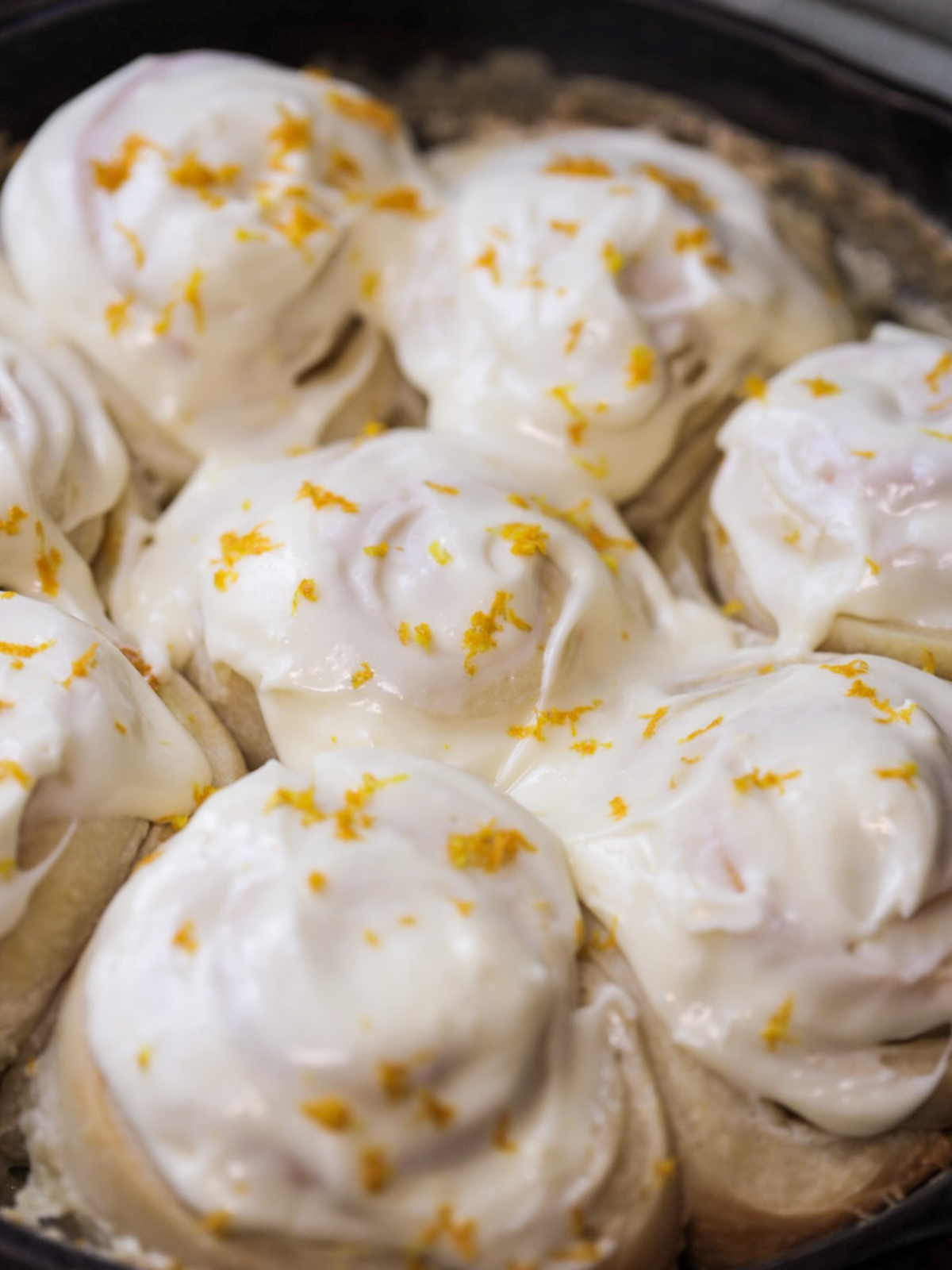
Beat together the cream cheese, orange juice, powdered sugar, salt, and orange zest until smooth. Spread over the warm rolls and enjoy!
Tips for the Best Sourdough Orange Rolls
Use an Active Sourdough Starter: Make sure your starter is bubbly, active, and at or near peak activity before mixing the dough. A strong starter is essential for achieving soft, fluffy rolls with a good rise.
Watch the Dough, Not the Clock: Enriched sourdough dough takes longer to ferment because of the butter, sugar, and eggs. In my cooler kitchen, around 66–68°F, bulk fermentation can take 10–12 hours or longer. Look for a noticeable increase in volume rather than relying solely on the clock.
Don’t Add Too Much Flour: The dough should be soft and slightly tacky. Resist the temptation to add extra flour while kneading, as this can make the finished orange rolls dense and dry.
Make the Dough Ahead of Time: After bulk fermentation, cover the dough tightly and refrigerate for 12–24 hours. When you’re ready to shape the rolls, roll the dough out directly from the refrigerator. Keep in mind that the second rise may take longer because the dough is cold.
Don’t Rush the Second Rise: Allow the shaped rolls to become noticeably puffy and expanded before baking. Underproofed rolls can turn out dense and doughy or shrink as they cool. If your kitchen is cool, the second rise may take several hours.
Use Fresh Orange Zest: Freshly grated orange zest adds bright citrus flavor without introducing excess moisture into the dough. Avoid grating the bitter white pith beneath the orange peel.
Add Heavy Cream for Extra Softness: For an extra rich and tender texture, pour ¼ cup of heavy cream evenly over the rolls just before baking. This step is optional but adds delicious moisture and richness.
Equipment
- Stand mixer with dough hook attachment
- Large mixing bowl
- Measuring cups and spoons
- Digital kitchen scale
- Rolling pin
- Pizza cutter or sharp knife
- Microplane or citrus zester
- Small mixing bowl for the filling
- Cast iron skillet or round baking dish
- Hand mixer for the cream cheese frosting
- Rubber spatula
- Instant-read thermometer (optional)
Storage
Room Temperature: Unfrosted sourdough orange rolls can be stored in an airtight container at room temperature for up to 2 days. Because the frosting contains cream cheese, frosted rolls should be refrigerated.
Refrigerator: Store leftover frosted orange rolls in an airtight container in the refrigerator for up to 4–5 days. Allow them to come to room temperature before serving, or gently reheat individual rolls for a soft, freshly baked texture.
Freezer: Unfrosted orange rolls can be frozen for up to 3 months. Allow the baked rolls to cool completely, then wrap individually in plastic wrap and place in a freezer-safe container or bag. Thaw overnight in the refrigerator before reheating and adding fresh cream cheese frosting.
Reheating: For the best texture, warm individual rolls in the microwave for approximately 10–20 seconds, or until just warmed through. Avoid overheating, as this can cause the rolls to become dry. Frosted rolls can also be gently reheated, although the frosting will soften and melt.
Ingredients
Sourdough Orange Roll Dough
- 100 g active bubbly sourdough starter (about ⅓–½ cup)
- 170 g whole milk warm but not hot (about ¾ cup minus 1 tablespoon)
- 2 large eggs room temperature
- 475 g bread flour about 3¾–4 cups
- 10 g salt about 1¾ teaspoons fine salt
- 50 g granulated sugar ¼ cup
- zest from 2 large oranges
- 70 g salted butter softened to room temperature (5 tablespoons)
Orange Sugar Filling
- 113 g salted butter softened (½ cup)
- 67 g granulated sugar ⅓ cup, packed
- zest from 1 orange
Orange Cream Cheese Frosting
- 113 g cream cheese softened (4 ounces)
- 45 ml freshly squeezed orange juice 3 tablespoons
- 240 g powdered sugar 2 cups
- Pinch of salt
- zest from 1 orange
Optional Before Baking
- 60 ml heavy whipping cream ¼ cup
Instructions
Prepare the Sourdough Starter
- Make sure your sourdough starter is active, bubbly, and at or near peak activity before preparing the dough. If necessary, feed your starter approximately 4–8 hours before mixing, depending on your kitchen temperature and feeding ratio.
- A strong, active starter is especially important when making enriched sourdough dough because ingredients like butter, eggs, and sugar can slow fermentation.
Make the Orange Roll Dough
- In the bowl of a stand mixer fitted with the dough hook attachment, combine the active sourdough starter, warm milk, eggs, bread flour, salt, granulated sugar, and orange zest.
- Mix on low speed until a shaggy dough begins to form.
- With the mixer running on low speed, gradually add the softened butter, approximately one tablespoon at a time. Allow each addition to become incorporated before adding more.
- Increase the mixer speed to medium-high and knead for approximately 8–10 minutes, or until the dough becomes smooth, elastic, and begins pulling away from the sides of the bowl.
- The dough should feel soft and slightly tacky but should not be excessively sticky. Avoid adding unnecessary flour, as this can result in dense, dry orange rolls.
Bulk Fermentation
- Transfer the dough to a lightly greased bowl and cover with a damp towel, plastic wrap, or reusable bowl cover.
- Allow the dough to ferment at room temperature for approximately 6–10 hours, or until it has increased in volume by about 50%.
- Because this is an enriched dough containing butter, sugar, and eggs, fermentation will be slower than with traditional sourdough bread.
- Important: In a cooler kitchen, around 66–68°F, bulk fermentation may take 10–12 hours. Warmer kitchens will ferment considerably faster. Watch the dough, not the clock!
- The dough should look noticeably fuller, feel airy, and show signs of fermentation before moving on to shaping. To save yourself time, put the dough in the fridge for up to 12-24 hours after it's fermented. You can roll the dough out right from the fridge, though the second rise may take a bit longer.
Prepare the Orange Filling
- In a small bowl, combine the softened butter, sugar, and orange zest.
- Mix until smooth and evenly combined. Set aside while preparing the dough.
Shape the Orange Rolls
- Once the dough has finished bulk fermentation, transfer it to a lightly floured work surface.
- Using a rolling pin, roll the dough into a large rectangle, approximately 12 × 18 inches and about ¼ inch thick.
- Spread the filling evenly over the dough, leaving a small border around the edges.
- Using a pizza cutter or sharp knife, cut the dough into 8 equal strips, each approximately 2¼ inches wide, cutting along the 18-inch side to create strips that are 12 inches long.
- Starting at one end, carefully roll each strip into a spiral, keeping the filling tucked inside.
- Arrange the 8 rolls in a greased cast iron skillet or other baking dish, leaving a little space between them to allow for rising.
Second Rise
- Cover the baking dish loosely with plastic wrap or a clean kitchen towel.
- Allow the rolls to rise at room temperature until noticeably puffy, expanded, and beginning to touch one another.
- This typically takes approximately 2–4 hours, depending on the temperature of your kitchen and the strength of your sourdough starter.
- The rolls should feel light and airy rather than dense. Do not rush this step, as underproofed orange rolls can bake up heavy and doughy.
Bake the Orange Rolls
- Preheat the oven to 350°F (175°C).
- If using the optional heavy cream, gently pour ¼ cup evenly over the risen rolls just before baking. This helps create a softer, richer texture.
- Place the baking dish on the center rack of the preheated oven.
- Bake for approximately 30–35 minutes, or until the rolls are lightly golden brown and baked through.
- For the most accurate results, the centers of the rolls should reach an internal temperature of approximately 190°F (88°C).
- If the tops begin browning too quickly, loosely cover the baking dish with aluminum foil for the remaining baking time.
- Remove from the oven and allow the rolls to cool slightly before frosting.
Prepare the Orange Cream Cheese Frosting
- While the rolls are baking, add the softened cream cheese to a medium mixing bowl.
- Using a hand mixer, beat until smooth and creamy.
- Gradually add the powdered sugar, orange juice, orange zest, and a pinch of salt.
- Continue mixing until the frosting is smooth, fluffy, and spreadable.
- For a thicker frosting, reduce the orange juice slightly or add additional powdered sugar. For a thinner glaze-like consistency, add a little more orange juice.
Frost and Serve
- Spread the orange cream cheese frosting generously over the warm or slightly cooled sourdough orange rolls.
- For a meltier frosting that seeps into the spirals, spread it over the rolls while they are still warm.
- For a thicker, more defined frosting, allow the rolls to cool for approximately 15–20 minutes before frosting. Serve warm and enjoy!