
Sourdough Glazed Donuts (Soft, Fluffy Brioche Recipe)
As an Amazon Associate, I earn from qualifying purchases.
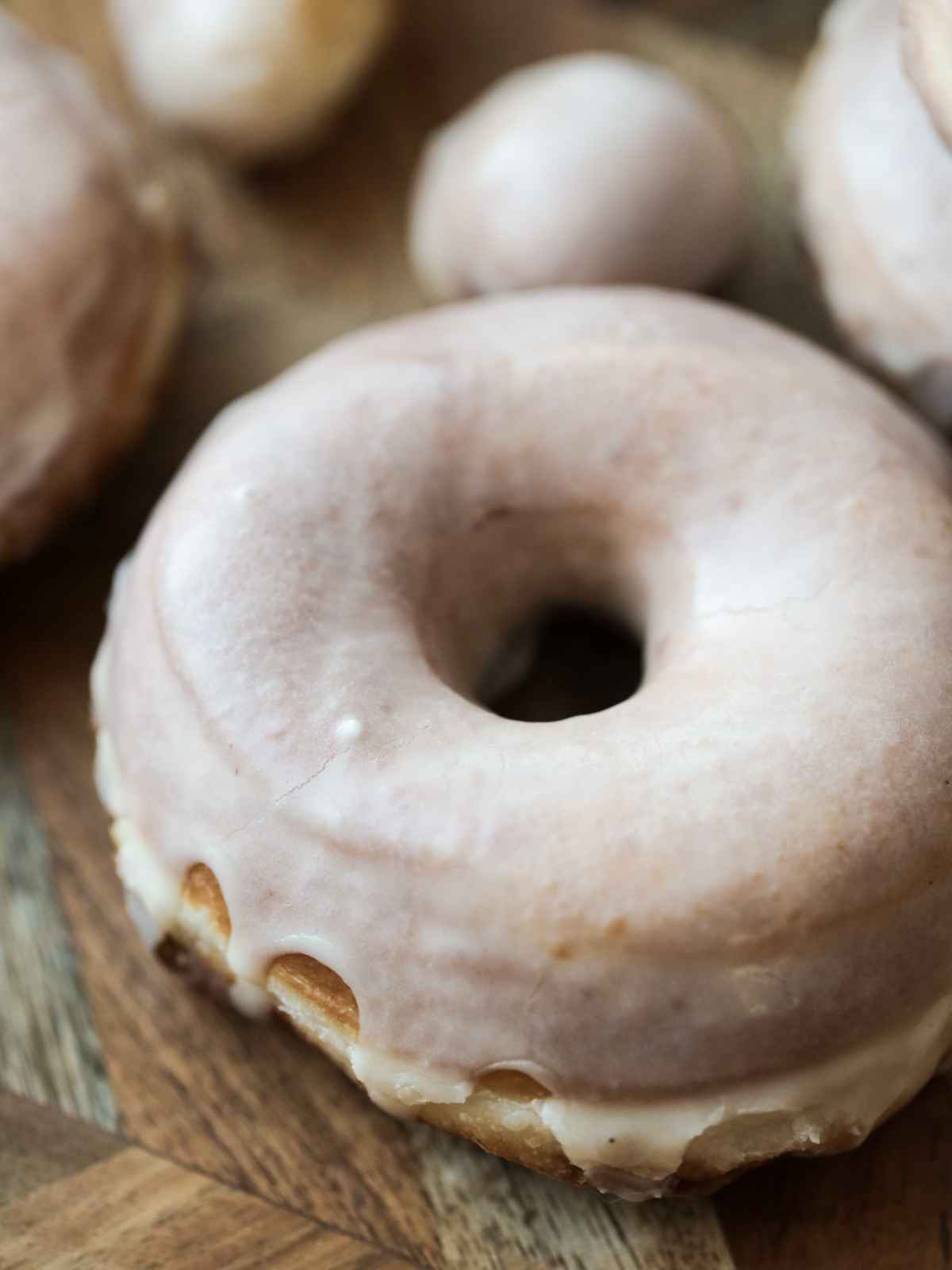
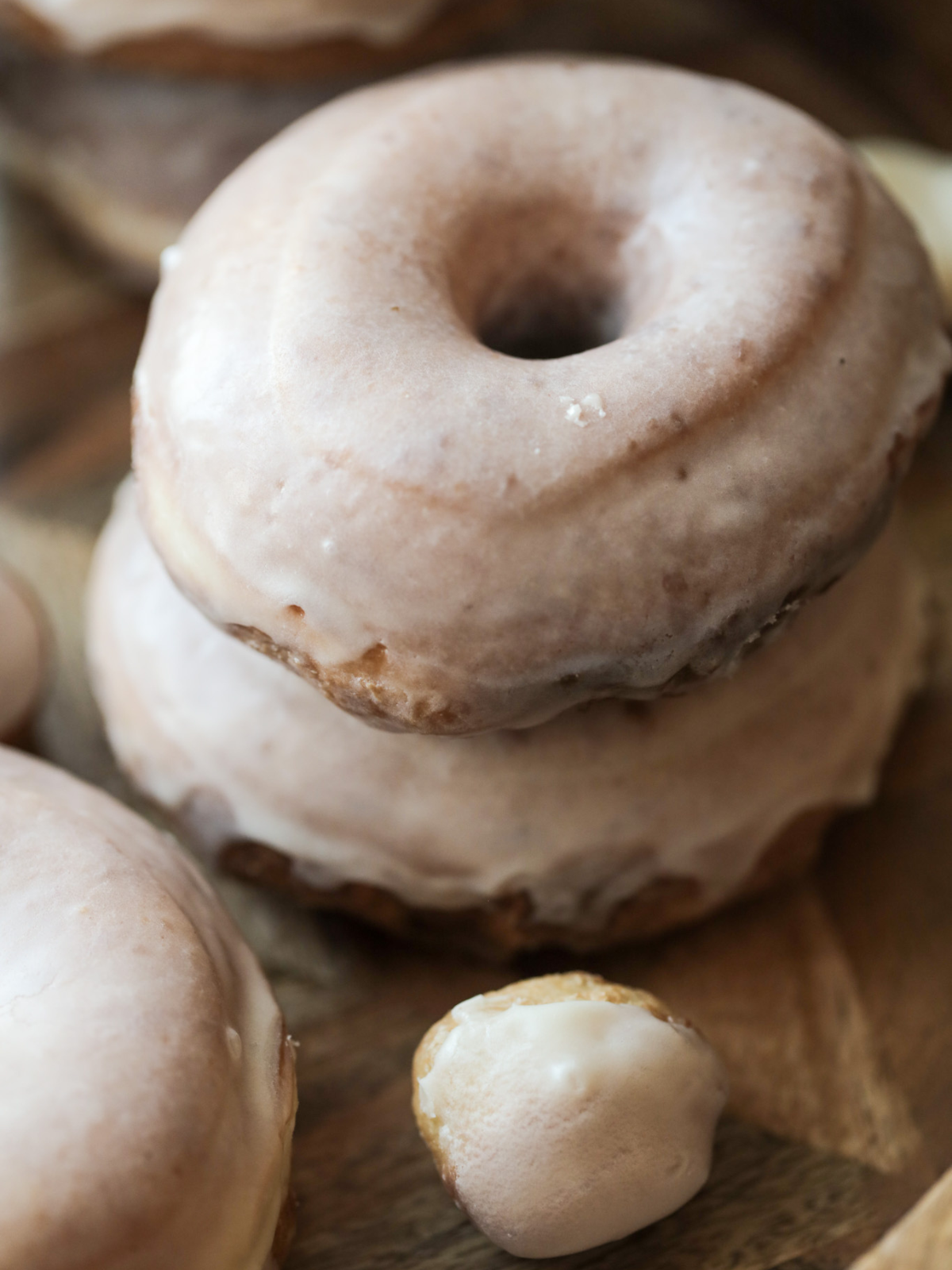
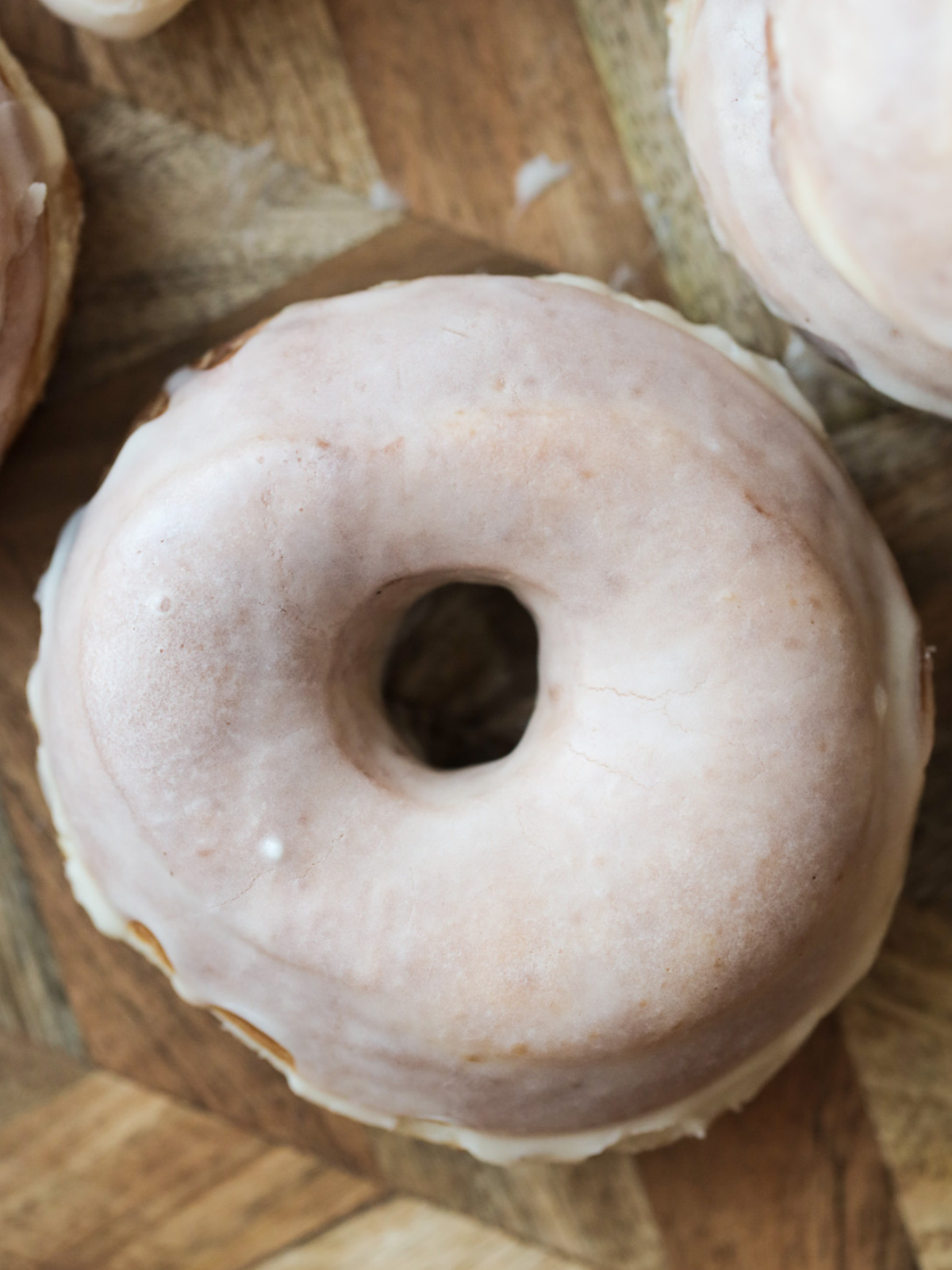
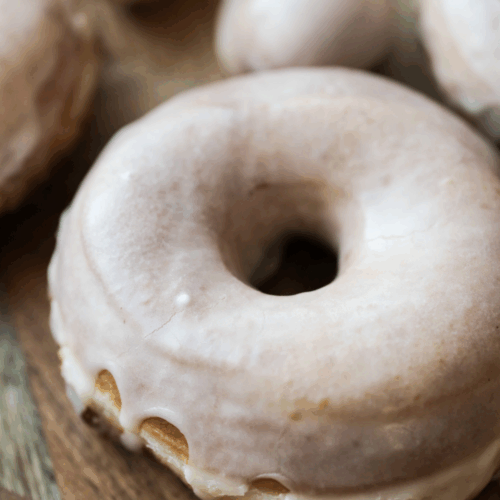
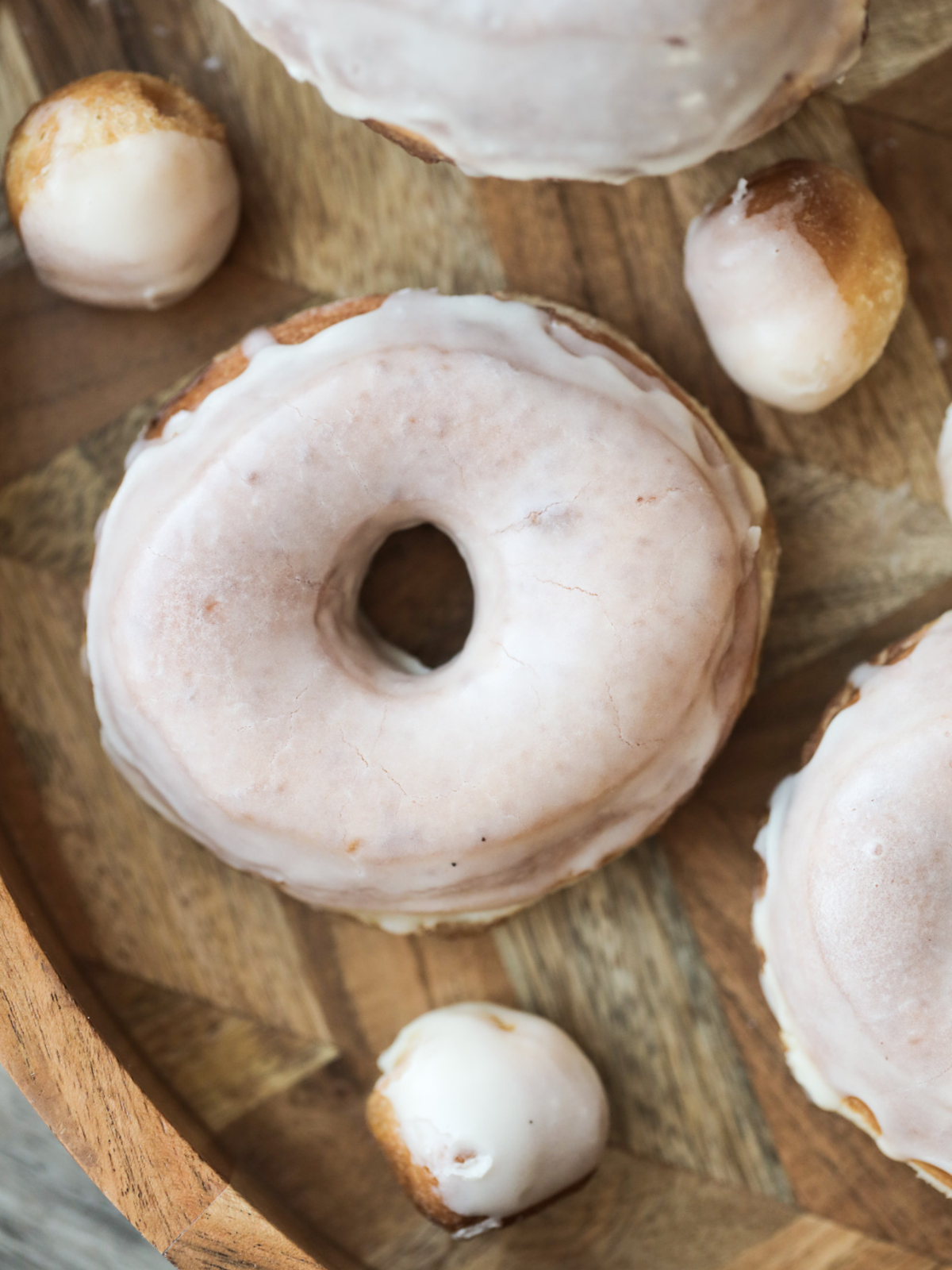
These naturally leavened sourdough glazed donuts are light, fluffy, and melt-in-your-mouth delicious! Fry these donuts in coconut oil or another neutral oil and dip them in a simple homemade glaze for truly the best naturally leavened donuts ever!
Our family has a favorite author, Bob Staake, and he has a book called “The Donut Chef” that is about two feuding donut chefs who compete for customers on the same street. They start out with simple donuts but are constantly trying to one-up each other with wackier, wilder donut flavors.
Ultimately, one chef realized that most folks love a good old-fashioned glazed donut the best, and he ended up being wildly successful just for keeping things simple!
And if that’s not a metaphor for how to walk through life, I don’t know what is. So often, we think we need to make things complicated to excel in life, but a truly simple life has so much joy to offer.
Anyway, these donuts are *heavenly*. They are light, fluffy, and packed with the gut-healthy benefits of sourdough. No yeast here!
If you are looking for a yeasted sourdough discard donut, these sourdough discard vanilla custard-filled donuts are *incredible*.
I love to make the dough the night ahead of time and let it bulk ferment overnight while I sleep–so plan the fermentation to make it work for you! My kitchen tends to run cold, so my dough allows me to do this. If yours doesn’t, you may want to bulk ferment during the day and let the dough chill overnight in the fridge before shaping and giving the second rise the next day.
Looking for more overnight sourdough recipes? Check these out!
- sourdough chocolate babka
- sourdough brioche cinnamon rolls
- sourdough pizza dough
- sourdough sandwich bread
- sourdough white chocolate strawberry bread
Step-By-Step Instructions
Make the Levain
In a small bowl, combine the sourdough starter, flour, and filtered water. Stir until fully combined. Cover and let rest at room temperature until bubbly and active (about 4–6 hours, depending on your kitchen).
Mix the Dough
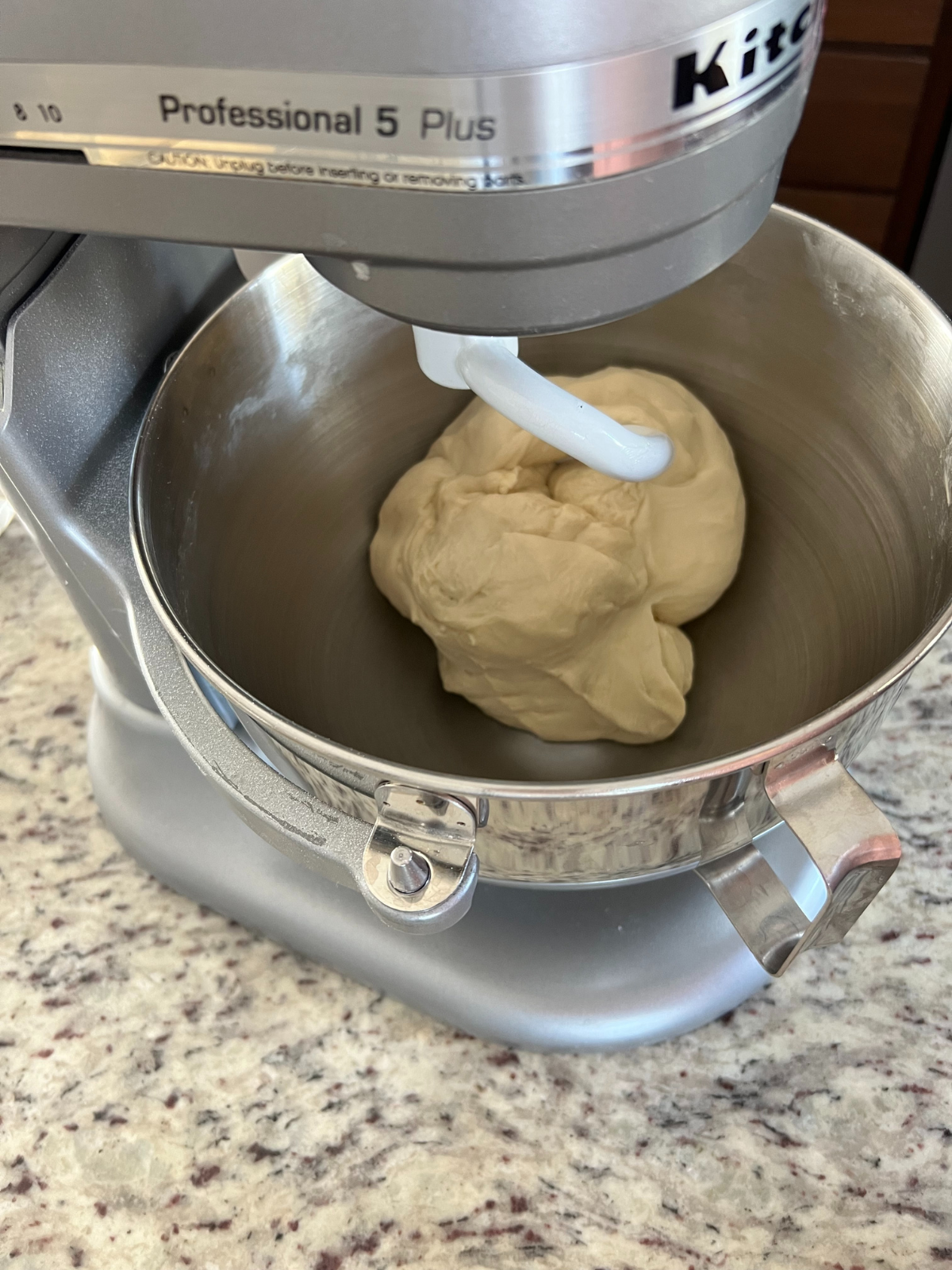
In the bowl of a stand mixer fitted with the dough hook, add:
- Active sourdough starter
- Warm whole milk (100–110°F)
- All-purpose flour
- Eggs
- Salt
- Granulated sugar
- Vanilla extract
Mix on low speed until everything is combined and a shaggy dough forms.
Add the Butter
With the mixer running on low, add the softened butter one tablespoon at a time, allowing each piece to fully incorporate before adding the next.
Once all the butter has been added, increase the speed slightly and knead for about 10 minutes, or until the dough becomes smooth, elastic, and pulls away from the sides of the bowl. The dough should feel soft but not overly sticky.
Bulk Fermentation
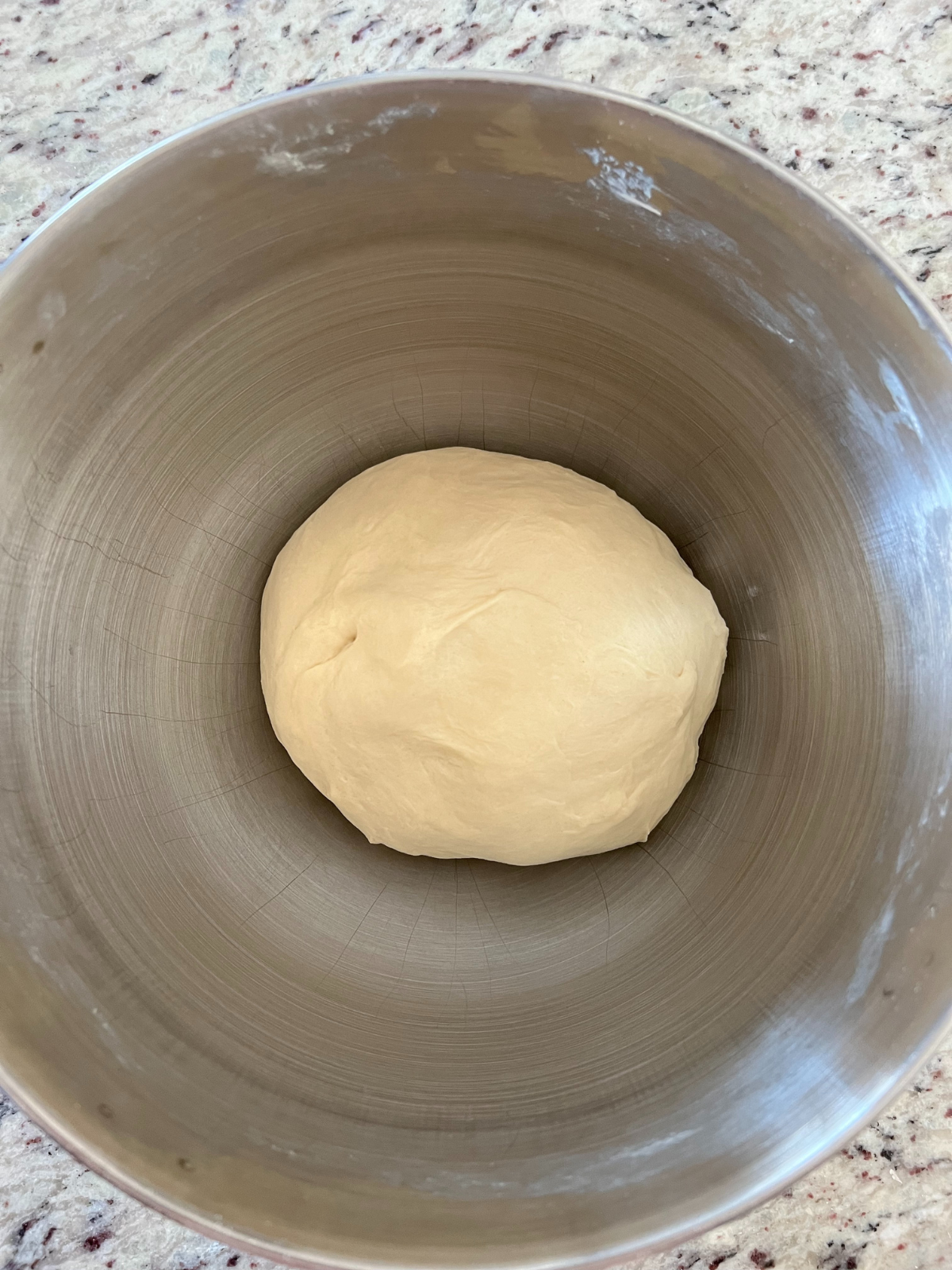
Transfer the dough to a lightly greased large mixing bowl. Cover tightly with plastic wrap.
Let the dough bulk ferment overnight, or for 6–10 hours, depending on the temperature of your kitchen.
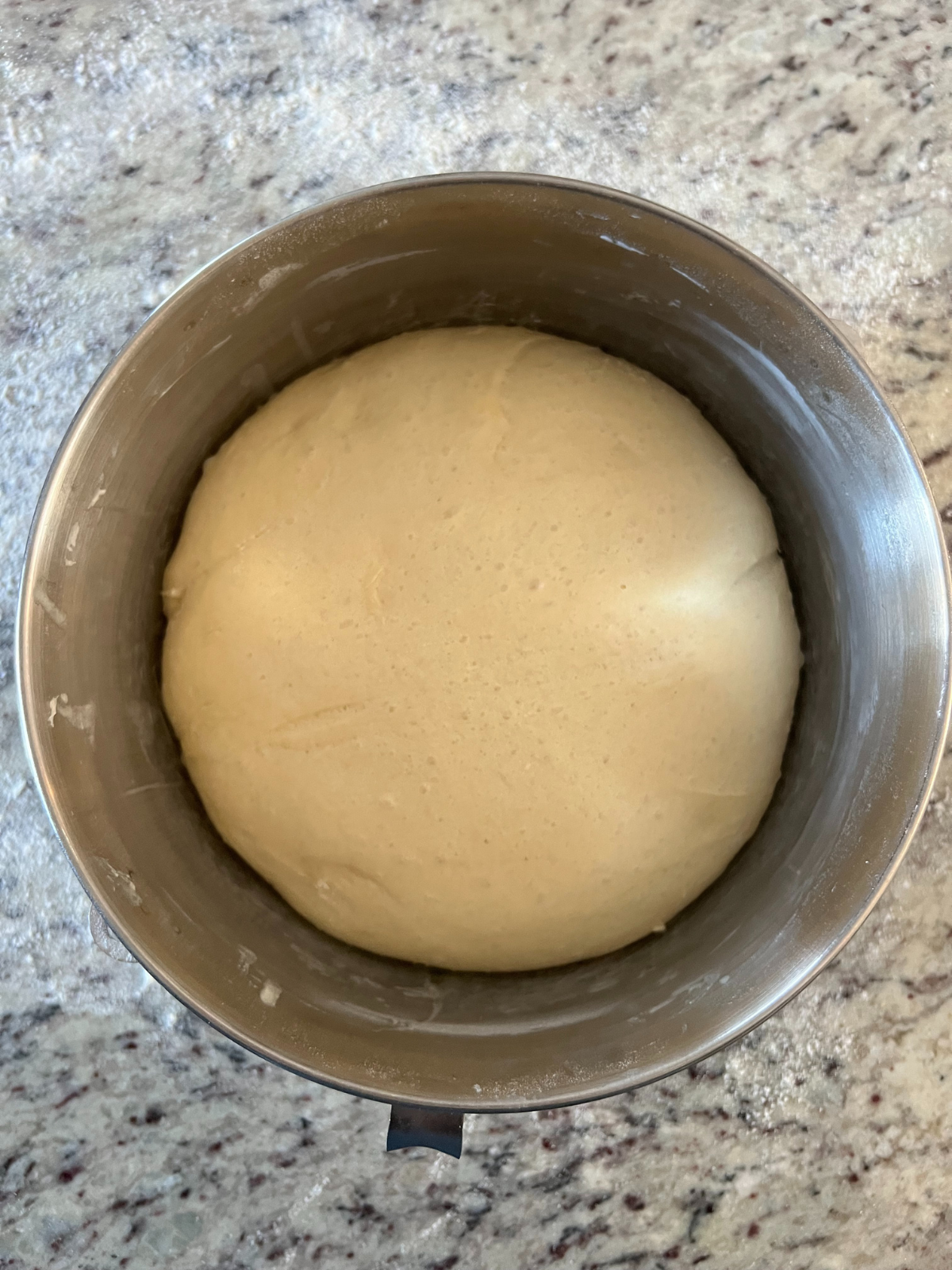
The dough should rise about 50-60%. Brioche dough rises more slowly due to the butter and eggs.
Once fermented, you can move on to shaping and the second rise, or cover the bowl tightly, refrigerate, and make the donuts the next day.
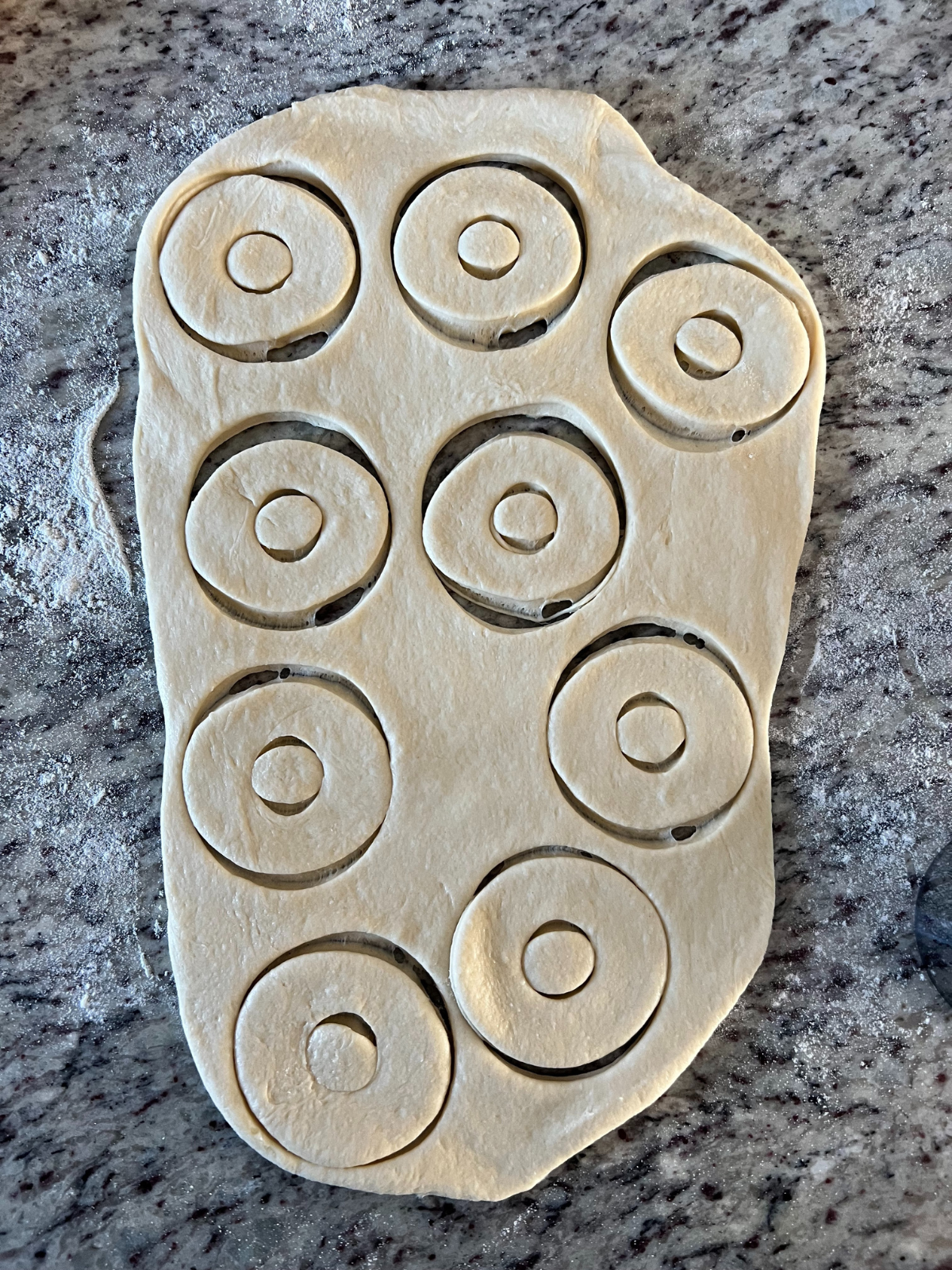
Roll and Cut the Donuts
In the morning, turn the dough out onto a lightly floured surface.
Roll the dough to about ½-inch thick. Use a donut cutter to cut out 12 donuts and 12 donut holes.
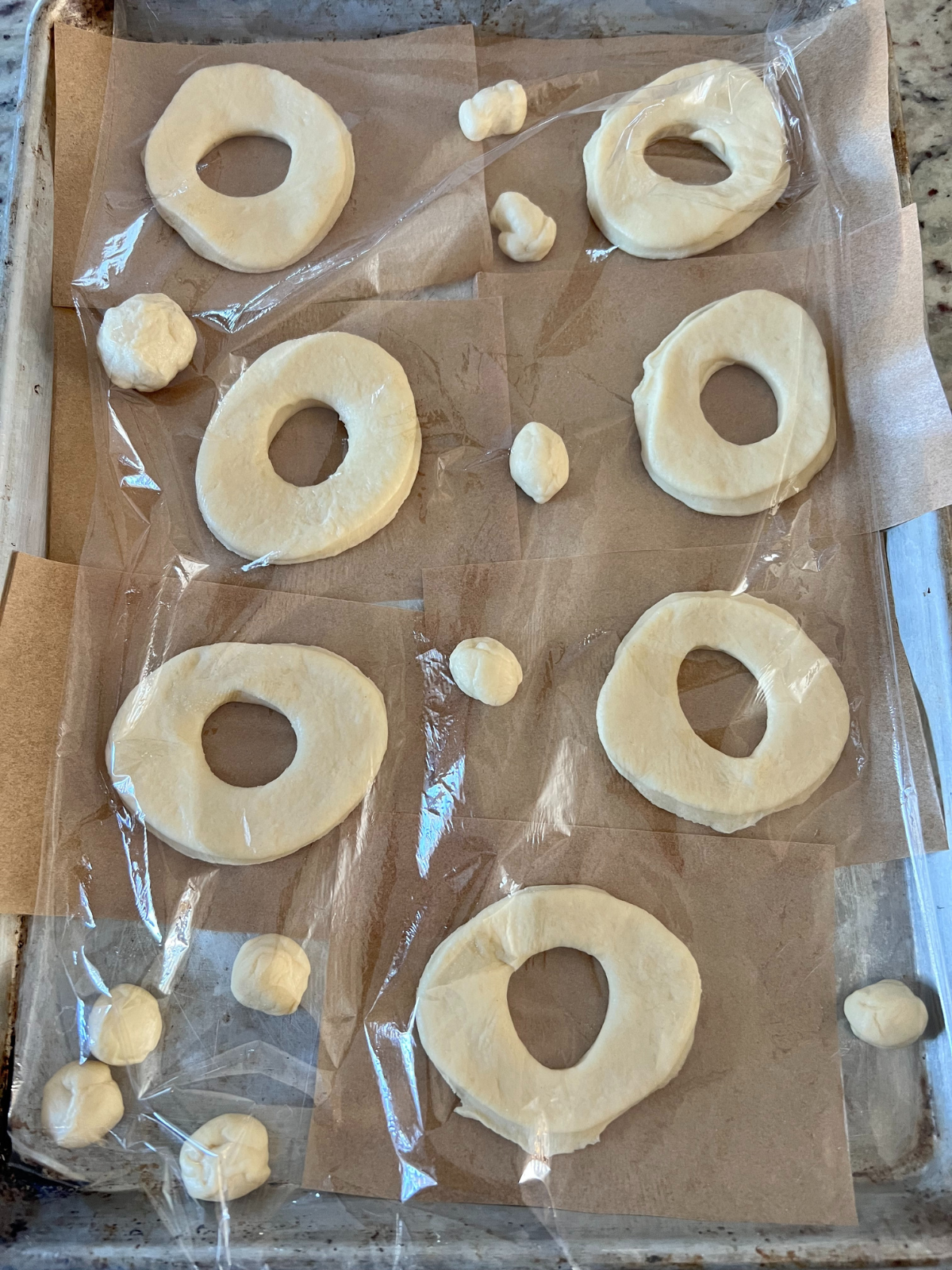
Place each donut onto an individual parchment square and transfer them to a baking sheet.
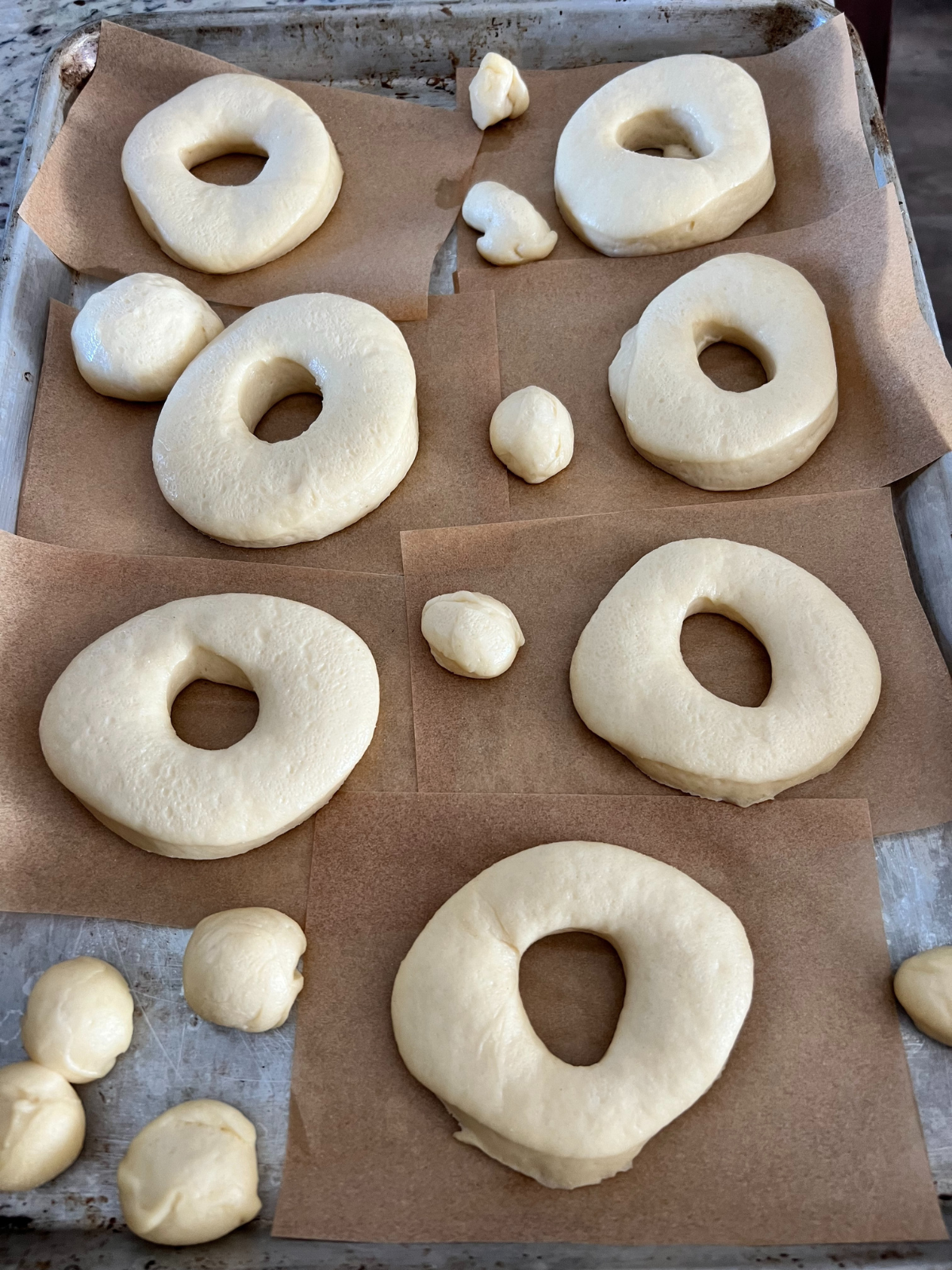
Second Rise
Cover loosely and place the donuts in a warm spot.
Allow them to rest for 2–3 hours, or until noticeably puffy and nearly doubled in size. When gently pressed, the dough should slowly spring back but leave a slight indentation.
Heat the Oil
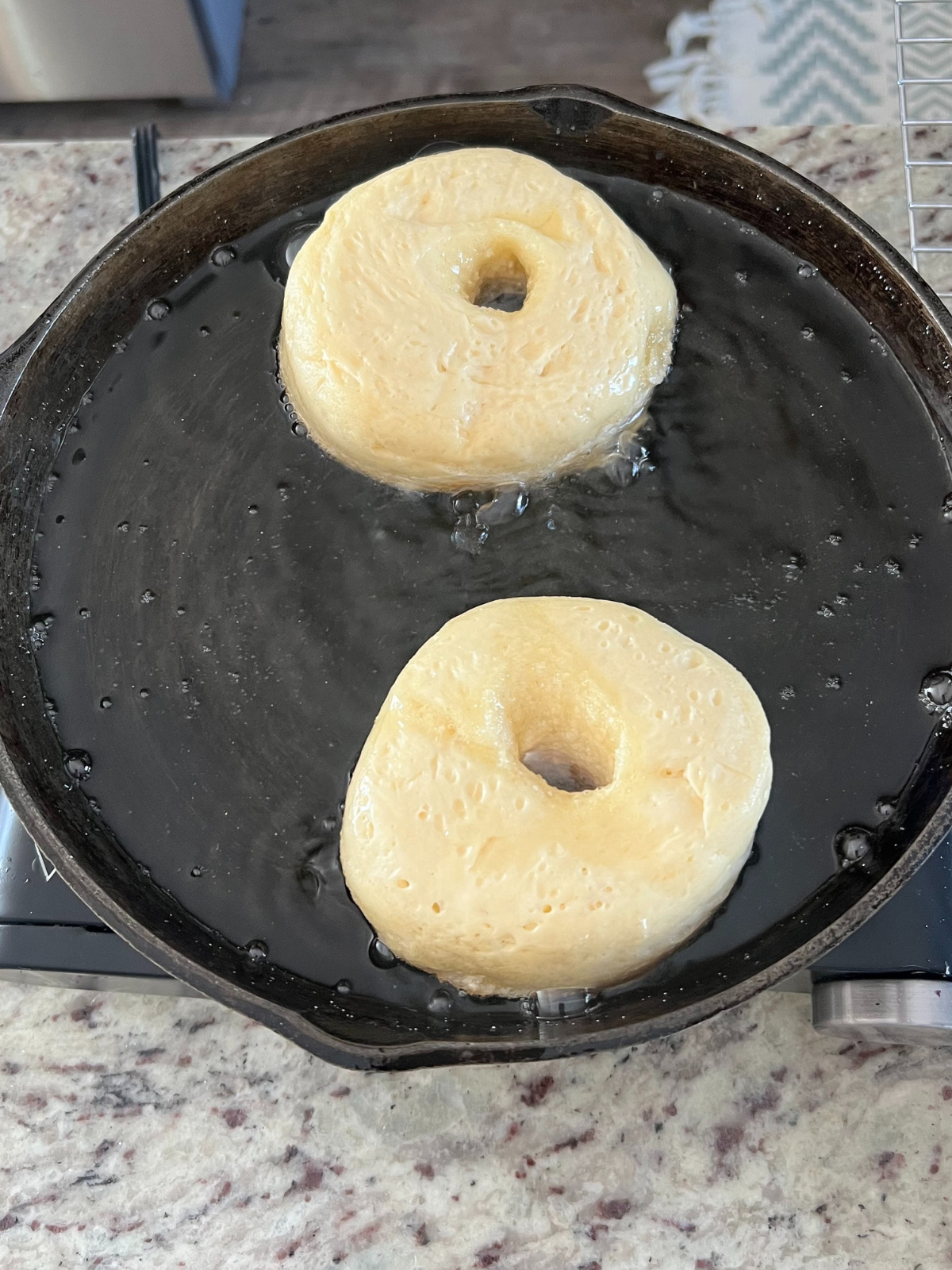
In a heavy-bottomed pot, add coconut oil (or another neutral oil) until it reaches about 2–3 inches deep.
Heat the oil to 340–360°F, monitoring with a thermometer to maintain a steady temperature.
Fry the Donuts
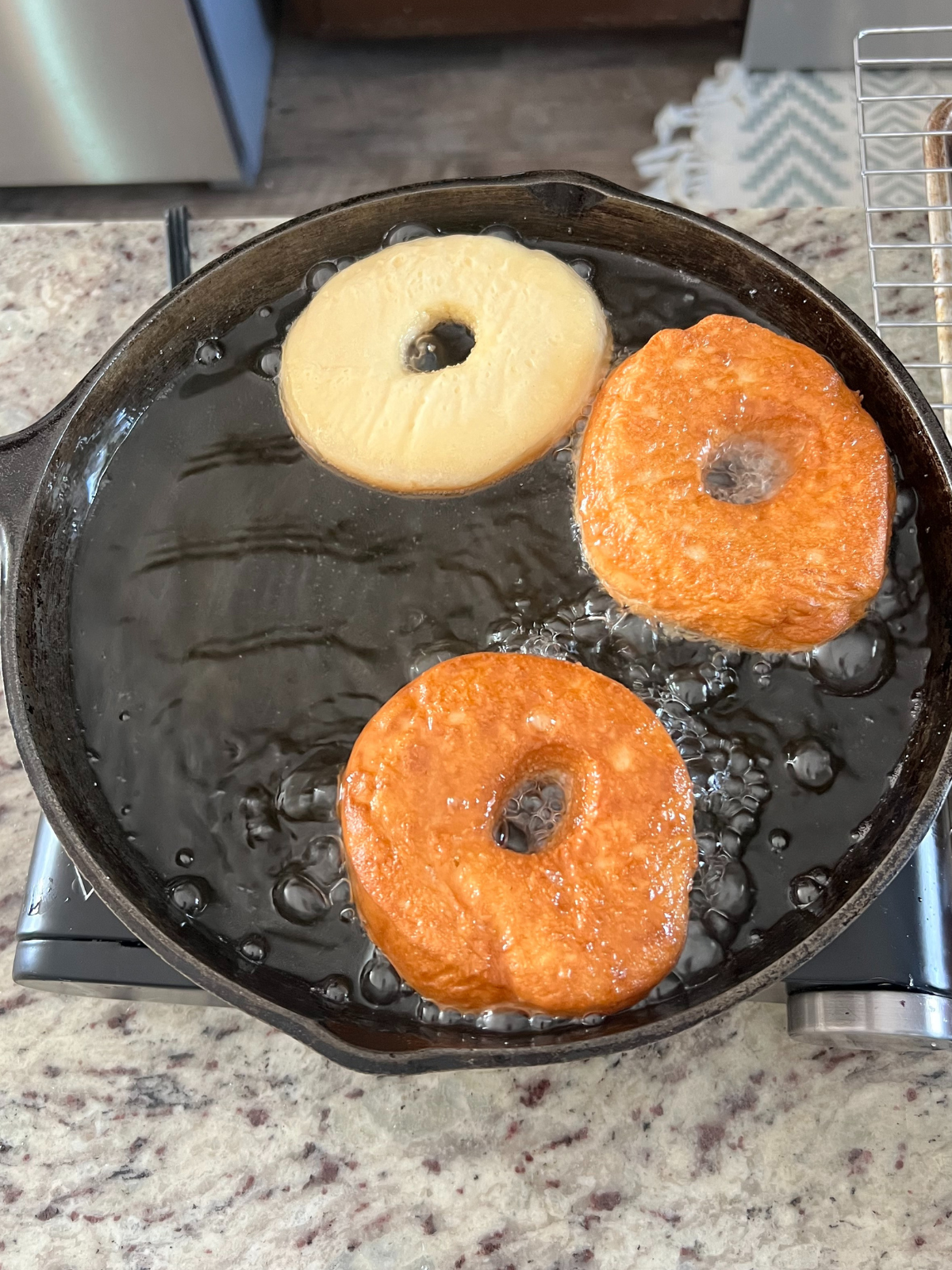
Carefully lower 2–3 donuts at a time into the hot oil (you can use the parchment square to help transfer them).
Fry for 1–2 minutes per side, or until golden brown.
Remove with a slotted spoon and transfer to a wire rack with parchment paper underneath to catch excess oil.
Repeat with remaining donuts and donut holes.
Make the Glaze
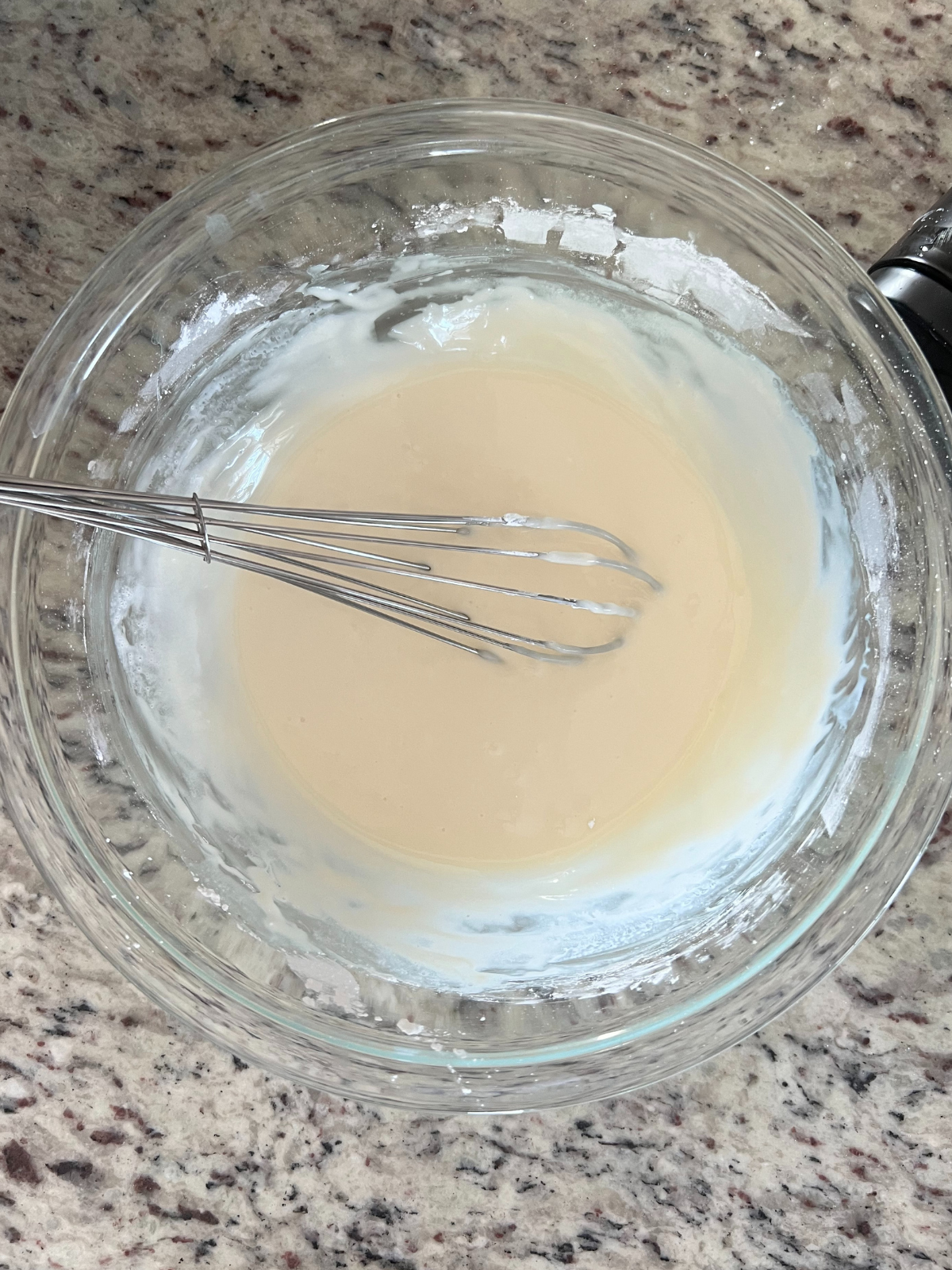
While the donuts are still warm, whisk together:
- Powdered sugar
- Heavy cream
- Vanilla extract
Whisk until smooth and pourable.
Glaze and Set
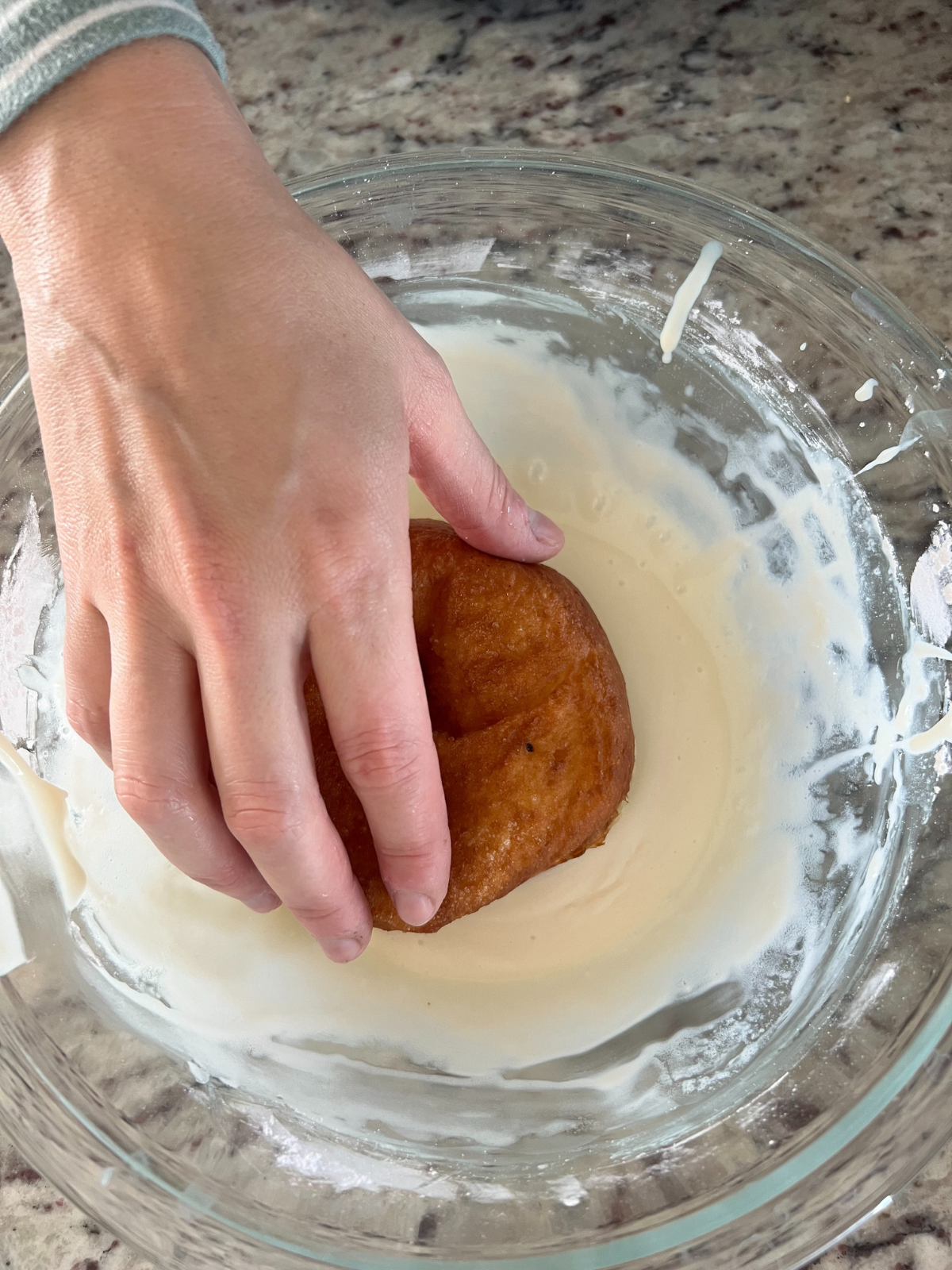
Dip each warm donut into the glaze, allowing the excess to drip off.
Return to the wire rack and let the glaze set for 10–15 minutes before serving.
Helpful Hints for the Best Glazed Sourdough Donuts
1. Start with an active, strong starter
Even though this is a brioche-style dough, fermentation strength matters. Use a starter that’s bubbly, recently fed, and at peak activity for the best rise.
2. Don’t rush the bulk fermentation
Brioche dough rises slower because of the butter, eggs, and sugar. Look for a 50–60% rise — not a full doubling — during the overnight bulk.
3. Add the butter gradually
Incorporate softened butter one tablespoon at a time. This allows the dough to fully absorb it and develop proper gluten structure. Rushing this step can lead to greasy or weak dough.
4. Knead until smooth and elastic
The dough should pull away from the sides of the bowl and pass a gentle windowpane test. Under-kneaded dough = dense donuts.
5. Chill slightly if the dough feels too soft
If your kitchen is warm and the dough feels sticky when rolling, pop it in the fridge for 20–30 minutes before shaping.
6. Roll evenly to ½ inch thickness
Too thin = flat donuts.
Too thick = raw centers.
½ inch is the sweet spot for fluffy interiors.
7. Use individual parchment squares
Placing each donut on its own square makes transferring to hot oil stress-free and prevents deflation.
8. Nail the second rise
Donuts should look puffy and airy and pass the finger dent test (indent slowly springs back halfway). Underproofed donuts will be dense; overproofed donuts may collapse.
9. Keep oil between 340–360°F
Too hot = dark outside, raw inside.
Too cool = greasy donuts.
Use a thermometer and adjust heat as needed between batches.
10. Don’t overcrowd the pan
Fry 2–3 at a time so the oil temperature doesn’t drop too much.
11. Fry 1–2 minutes per side
They should be golden brown — not deep brown.
12. Glaze while warm (not piping hot)
Dip donuts when they’re warm so the glaze adheres beautifully, but not so hot that it melts right off.
13. Let the glaze set 10–15 minutes
This gives you that classic bakery-style crackly finish.
14. Eat the same day if possible
Naturally leavened brioche donuts are best within hours of frying — soft, airy, and dreamy.
Equipment
- Stand mixer with dough hook attachment
- Mixing bowl (large for bulk fermentation)
- Kitchen scale (for accurate measurements)
- Plastic wrap or bowl cover
- Rolling pin
- Donut cutter (or 3-inch round cutter + small cutter for center)
- Baking sheet
- Parchment paper (cut into individual squares)
- Heavy-bottomed pot or Dutch oven
- Candy or digital thermometer (for monitoring oil temperature)
- Slotted spoon or spider strainer
- Wire cooling rack
- Whisk (for glaze)
- Measuring cups and spoons
Storage and Make Ahead Instructions
- Store at room temperature in an airtight container for up to 2 days.
- For the best texture, reheat unglazed donuts for 5–8 seconds in the microwave before glazing.
- Freezing is best done before frying (after shaping).
Make some more sourdough breakfast recipes!
- sourdough monkey bread
- sourdough ham, cheese, and egg hand pies
- sourdough granola
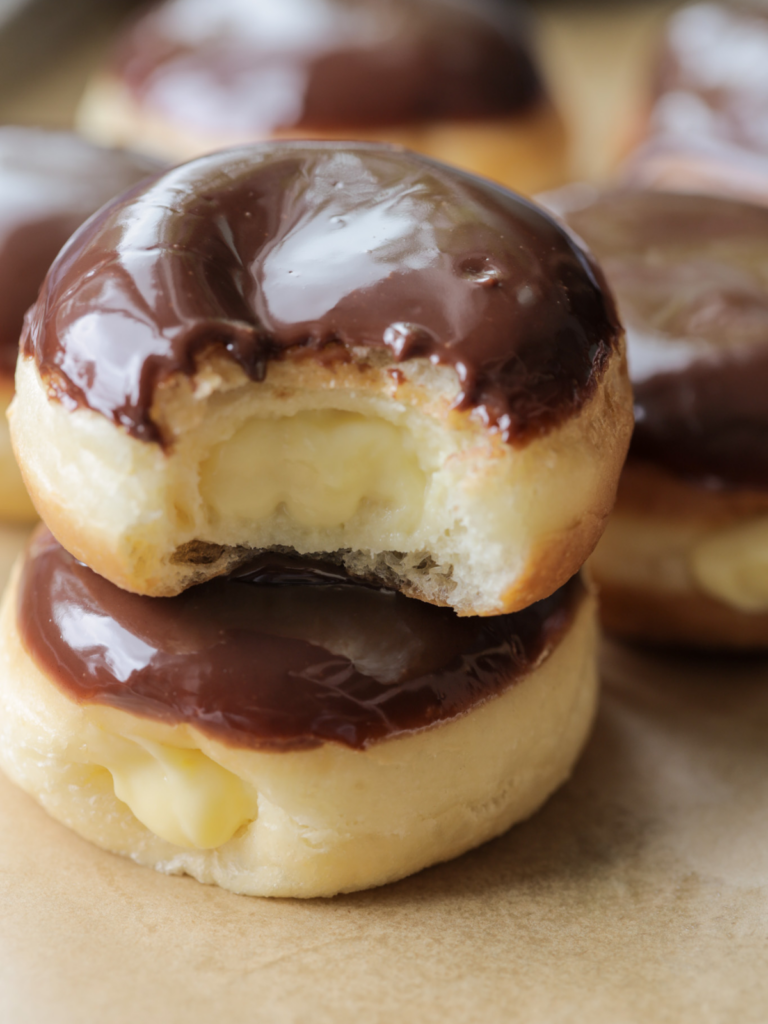
- sourdough chocolate custard-filled donuts
Sourdough Glazed Donuts
Ingredients
Levain
- 30 grams sourdough starter
- 60 grams all-purpose flour
- 60 grams filtered water
Brioche Sourdough Donut Dough
- 2/3 cup active sourdough starter 150 g
- 1/2 cup whole milk warm (100–110°F) (122 g)
- 2 3/4 cups all-purpose flour 390 g
- 2 large eggs room temperature (105 g)
- 1/4 teaspoon salt 2 g
- 1/4 cup granulated sugar 53 g
- 1 teaspoon vanilla bean paste or vanilla extract 5 g
- 8 tablespoons salted butter softened (113 g)
Vanilla Glaze
- 2 cups powdered sugar (240 g)
- 1/3 cup heavy cream (80 g)
- 1 teaspoon vanilla bean paste or vanilla extract (5 g)
Instructions
Make the Levain
- In a small bowl, mix together the sourdough starter, flour, and water.
- Cover loosely and let rest at room temperature until bubbly and active, about 4–6 hours.
Prepare the Dough
- Add all dough ingredients except the butter to the bowl of a stand mixer fitted with a dough hook.
- Mix until the ingredients come together into a shaggy dough.
- With the mixer running on low, add the softened butter one tablespoon at a time, allowing each piece to fully incorporate before adding the next.
- Increase speed to medium to medium-high and knead for about 10 minutes, or until the dough is smooth, elastic, and pulling away from the sides of the bowl.
Bulk Fermentation
- Transfer the dough to a large, lightly greased bowl.
- Cover with plastic wrap and let bulk ferment 6–10 hours, depending on kitchen temperature.
- The dough should rise about 50–60%. (Brioche doughs are known to rise more slowly.) Move on to the shaping and second rise next, or you can cover the bowl of dough tightly and let chill in the fridge overnight.
Shape the Donuts
- In the morning, turn the dough out onto a lightly floured surface.
- Roll the dough to about 1/2-inch thickness.
- Use a donut cutter to cut 12 donuts and 12 donut holes.
- Place each donut onto an individual square of parchment paper and transfer to a baking sheet.
Final Rise
- Cover loosely and let the donuts rise in a warm place until puffy, about 2–3 hours. To test if the dough is done rising, press your finger against a donut. If the indentation slowly springs back, the dough is fully fermented. If it springs back quickly, it needs more time.
Fry the Donuts
- Add coconut oil (or another neutral oil) to a heavy-bottomed pan, filling it 2–3 inches deep.
- Heat oil to 340–360°F, making sure to keep it within that range to avoid burning the donuts.
- Fry donuts in batches for 1–2 minutes per side, until golden brown.
- Transfer to a wire rack with parchment paper underneath to catch excess oil.
Glaze the Donuts
- In a medium bowl, whisk together powdered sugar, heavy cream, and vanilla extract until smooth.
- Dip the warm donuts into the glaze, then return to the wire rack to set. Allow the glaze to set before enjoying (or don't–they are that good!).
Notes
- Store at room temperature in an airtight container for up to 2 days.
- For the best texture, reheat unglazed donuts for 5–8 seconds in the microwave before glazing.
- Freezing is best done before frying (after shaping).
Nutrition



This is an absolute classic sourdough donut recipe and frying them in coconut oil makes it a little less guilty of a pleasure. 🙂 I sure hope you enjoy them and if you make them, please let me know what you think!