Cranberry Wild Rice Sourdough Bread
As an Amazon Associate, I earn from qualifying purchases.
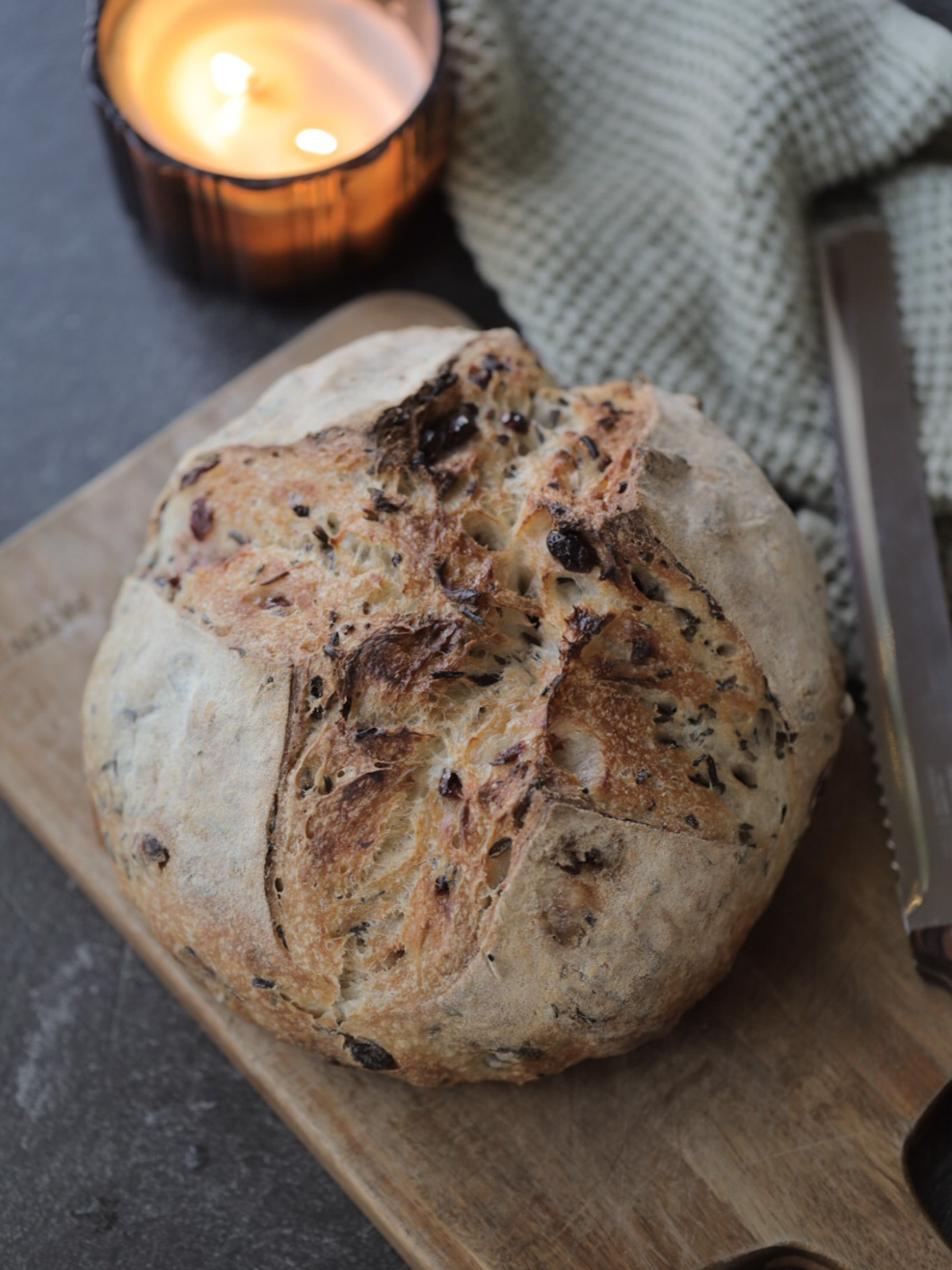
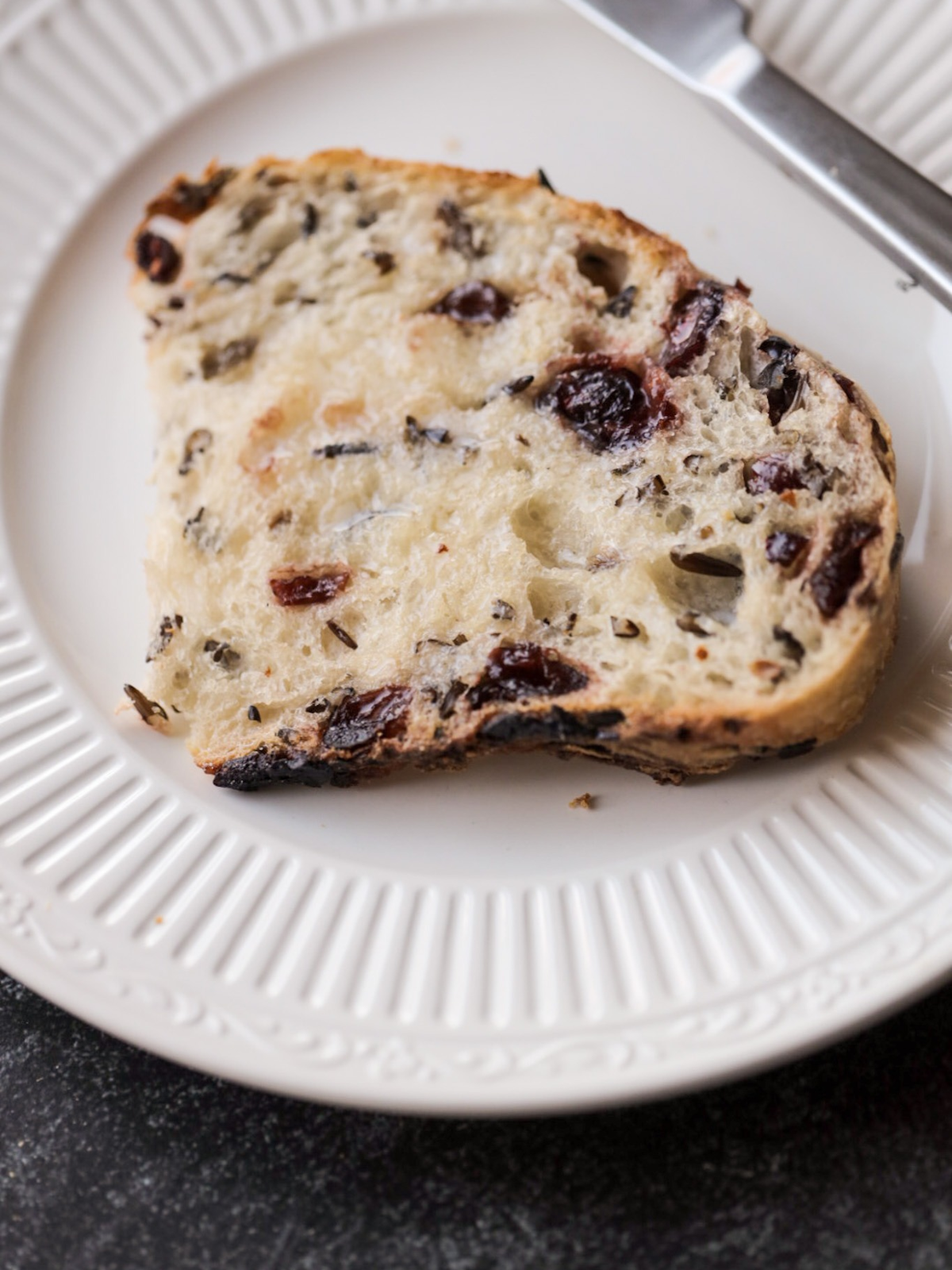
This sourdough cranberry wild rice bread is a crusty, naturally leavened loaf filled with nutty wild rice and sweet-tart dried cranberries. This is my favorite cool-weather loaf to make! As a Minnesota girl, I love utilizing wild rice in unique ways, and this pairing works beautifully! I personally love it toasted with a pad of butter.
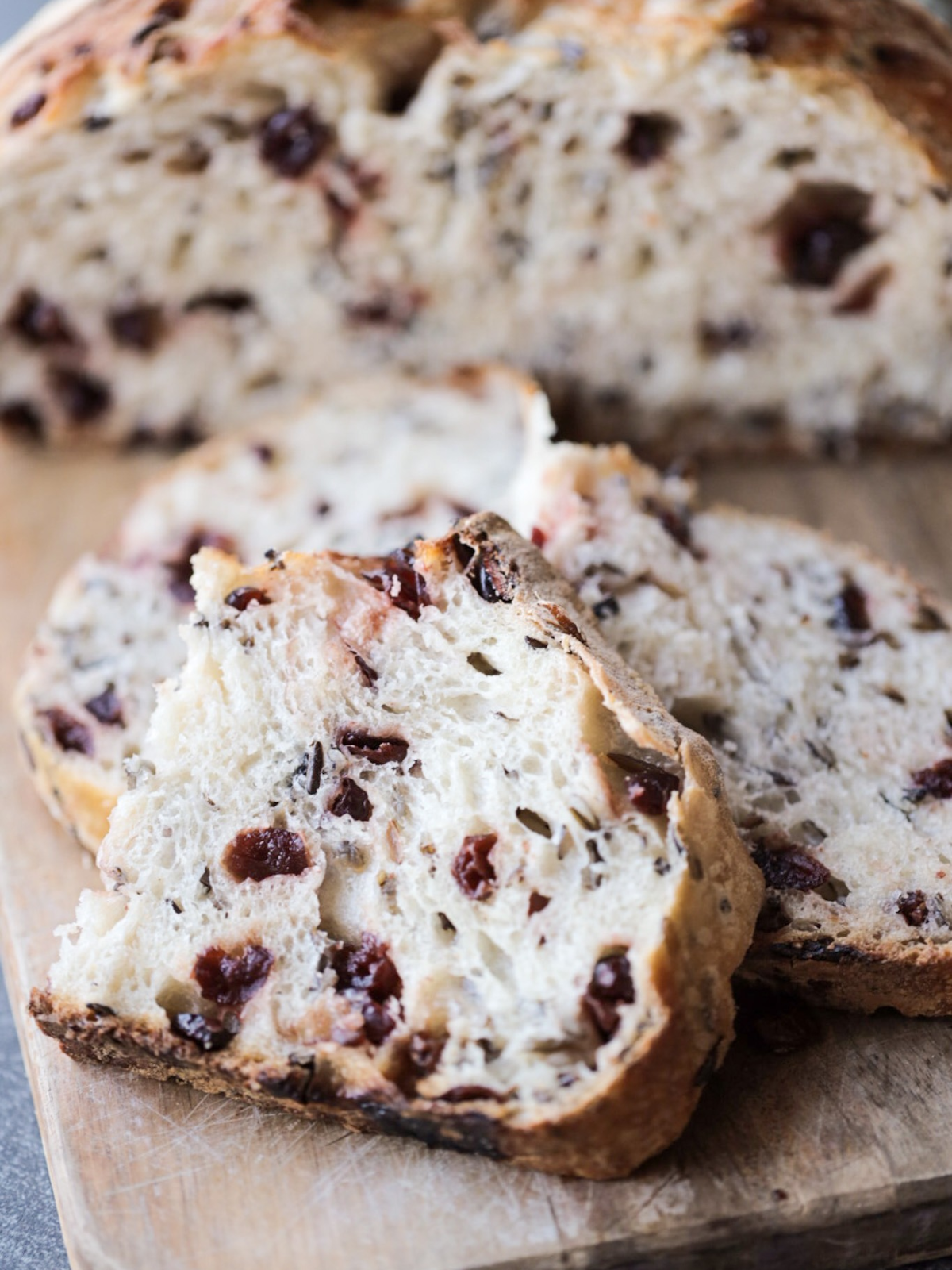
So there’s a cafe, Lazy Bear Grill, we stop at every time we are on our way home from a trip up on the north shore. And they have *the best* cranberry wild rice bread. We’ve been going there for years. This recipe is an ode to them.
The dough starts with the same simple formula as my classic sourdough bread. The only additions are 1 cup of cooked wild rice and 1 cup of Craisins, folded in during the second stretch and fold. An overnight cold proof builds flavor and makes the loaf easy to score, and a Dutch oven gives it a deeply golden, crackly crust.
Bake a loaf for your Thanksgiving table, bring one to whoever is hosting, or save the leftovers for the best turkey sandwich of the year (!!!). The full recipe, with gram and US measurements, is in the recipe card below.
Looking for more sourdough bread recipes? Check these out!
- sourdough apple cider butterscotch bread
- sourdough funfetti bread
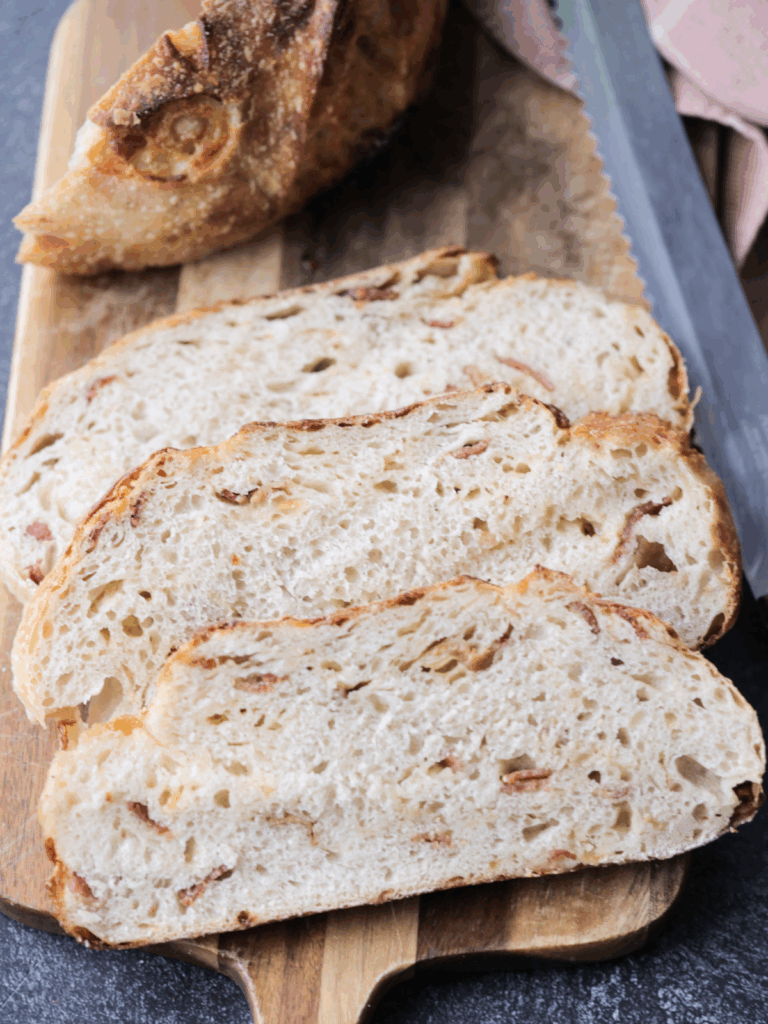
- sourdough jalapeno cheddar bread
- sourdough chocolate cherry bread
Why You’ll Love This Cranberry Wild Rice Sourdough Bread
- The flavor is cozy and balanced. Tangy sourdough, earthy wild rice and sweet-tart cranberries all have a place in every slice.
- The texture is irresistible. You get a crisp, blistered crust, a soft crumb, a gentle chew from the rice and little pockets of jammy fruit.
- It only takes six ingredients. Starter, water, bread flour, salt, wild rice and dried cranberries are all you need for the dough.
- It builds on a basic sourdough loaf. If you can make a simple sourdough boule, you can make this bread. The mix-ins take just a few extra minutes.
- It is ideal for the holidays. Cranberry and wild rice belong on a Thanksgiving or Christmas table, and a loaf makes a beautiful homemade gift.
- The schedule is flexible. The dough proofs in the refrigerator for 12 to 24 hours, so you can bake when it suits your day.
- It is wonderful any way you slice it. Serve it warm with butter, toast it with honey, pair it with soup or pile it high with leftover turkey.
How to Make Sourdough Wild Rice Cranberry Bread
This is an overview of the process. You will find the complete ingredient amounts and detailed instructions in the recipe card below.
1. Cook and cool the wild rice
Cook the wild rice according to the package directions, drain it very well and let it cool completely. You need 164 grams (1 cup) cooked rice, which takes about 55 grams (⅓ cup) uncooked. This is an easy step to do a day ahead.
2. Feed your starter
Feed your starter 4 to 6 hours before mixing. You know your kitchen environment, feed schedule, and starter better than me, so I won’t get too detailed on this one. It is ready when it has roughly doubled and is full of bubbles.
3. Mix the dough
Combine 150 grams (⅔ cup) active starter, 400 grams (1⅔ cups) warm water and 550 grams (4½ cups plus 1 tablespoon) bread flour until no dry flour remains. The dough will look shaggy. Cover it and let it rest in a warm spot for 30 minutes.
4. Add the salt and begin stretching and folding
Press 10 grams (1¾ teaspoons) salt into the dough. Lift one side of the dough, stretch it up and fold it over the center. Rotate the bowl 90 degrees and repeat for a total of 4 folds. Bulk fermentation begins now.
5. Fold in the wild rice and cranberries
This is the most important step, and it happens during the second stretch and fold, 30 to 45 minutes after the first. Waiting gives the dough time to start building strength before the mix-ins go in.
With wet hands, scatter half of the rice and half of the cranberries over the dough and press them in gently. Stretch and fold two sides over the top to enclose them. Add the remaining rice and cranberries, then finish the last two folds, tucking in any pieces that escape.
The dough will feel lumpy and slippery at this stage. Keep going, because the mix-ins will spread out and the dough will smooth over during the next few sets.
6. Finish bulk fermentation
Continue the stretch and folds every 30 to 45 minutes for the rest of the 4 to 6 hours, switching to gentle coil folds toward the end. The dough is ready when it has grown by 50 to 100%, looks airy and jiggles when you move the bowl.
7. Shape and cold proof
Stretch the dough into a rectangle about 8 by 15 inches (20 by 38 cm), fold in the corners, roll it up and shape it into a tight ball. Tuck any exposed cranberries underneath, place the dough top side down in a floured banneton, then cover and refrigerate for 12 to 24 hours.
8. Score and bake
Preheat your Dutch oven at 450°F (232°C) for 30 to 60 minutes. Turn the cold dough onto floured parchment and score it with one deep slash.
When using inclusions, I also use barriers between the bread and my Dutch oven (I also recommend this for anyone who has a dark Dutch oven). This includes a bread sling, parchment paper, and sometimes I like to sprinkle some dry rice on the bottom of the pan before placing the bread sling and parchment paper on top.
Bake covered for 30 minutes, then uncovered for 20 minutes more, or until the center reaches 205°F (96°C).
9. Cool before slicing
Let the loaf cool on a wire rack for 30 to 60 minutes. It is hard to wait, but the crumb is still setting, and a full hour gives you the cleanest slices.
Helpful Tips
- Use a strong, active starter. This dough carries a lot of mix-ins, so your starter should double reliably before you begin.
- Weigh your ingredients. A kitchen scale is the most accurate way to make sourdough, and it takes the guesswork out of measuring sticky starter and flour.
- Dry the wild rice well. Extra water on the rice makes the dough slack and harder to shape. Drain it thoroughly and pat it dry.
- Let the rice cool completely. Add it at room temperature so it does not warm the dough or speed up fermentation unevenly.
- Do not add the mix-ins too early. Waiting until the second stretch and fold lets the dough begin developing structure first.
- Watch the dough more than the clock. Kitchen temperature and starter strength both affect timing. Look for 50 to 100% growth, an airy feel and a gentle jiggle.
- Tuck in surface cranberries. Exposed fruit can scorch in a hot oven, so roll any stray pieces under the loaf when you shape it.
- Protect the crust if needed. The sugar in the cranberries encourages browning. If the crust gets too dark before the center reaches 205°F (96°C), tent it loosely with foil.
- Use a thermometer. Mix-ins add moisture and weight, so internal temperature is the most reliable way to know this loaf is done.
Equipment
- Kitchen scale: for accurate gram measurements.
- Large mixing bowl: with enough room for stretch and folds.
- Dough whisk: optional, but handy for mixing shaggy dough.
- Bench scraper: for moving and shaping sticky dough.
- Banneton: a large one, about 10 inches, since this dough weighs about 1.4 kg (a little over 3 pounds).
- Dutch oven: 5-quart or larger, to trap steam for a tall loaf and crisp crust.
- Parchment paper: for lowering the dough safely into the hot pot.
- Bread lame: or a very sharp knife, for scoring.
- Instant-read thermometer: to confirm the loaf has reached 205°F (96°C).
- Wire cooling rack: to keep the bottom crust from turning soft.
Storage
At room temperature: Let the loaf cool completely, then keep it in an airtight container or bread bag for up to 3 days. Avoid the refrigerator, which dries bread out more quickly.
In the freezer: Slice the cooled loaf, wrap it well and freeze it in a freezer bag for up to 3 months. You can take out just what you need and toast the slices straight from frozen.
To make ahead for the holidays: Bake the bread, cool it completely and freeze it. Thaw a whole loaf at room temperature, then warm it at 350°F (177°C) for 10 to 15 minutes to bring back the crisp crust.
Frequently Asked Questions
When do you add wild rice and cranberries to sourdough?
Add them during the second stretch and fold, 30 to 45 minutes after the first set. By then, the dough has started to build strength but is still easy to stretch around the mix-ins. Scatter on half, fold, then add the rest and finish folding.
Can you use a wild rice blend?
I do recommend wild rice because it can change the texture of the bread. But yes, you can still use a wild rice blend. The flavor will be a little milder, and softer rice varieties may make the dough slightly stickier.
Do you need to soak the dried cranberries?
No, Craisins and other soft, sweetened dried cranberries can go straight from the bag into the dough. If yours are especially dry or hard, soak them in warm water for 10 minutes, then drain them and pat them very dry so they don’t add extra moisture.
Can you make this bread without a Dutch oven?
Yes. Preheat a baking stone, steel or heavy baking sheet at 450°F (232°C) for 30 to 60 minutes, with a metal pan on the rack below. Slide the scored loaf and parchment onto the hot surface, then carefully pour 240 grams (1 cup) of boiling water into the metal pan and close the door to trap the steam. Bake for 30 minutes, remove the water pan, then bake for about 20 minutes more, or until the center reaches 205°F (96°C). The loaf may not rise quite as tall or have as crisp a crust, but it will still be delicious.
Wild Rice Cranberry Sourdough Bread
Ingredients
For the dough
- 150 grams sourdough starter active and bubbly (⅔ cup)
- 400 grams warm water 1⅔ cups
- 550 grams bread flour 4½ cups plus 1 tablespoon
- 10 grams fine salt 1¾ teaspoons
For the mix-ins
- 164 grams cooked wild rice cooled and well drained (1 cup)
- 160 grams Craisins or other sweetened dried cranberries 1 cup
For shaping and baking
- Bread flour or rice flour for the work surface and banneton (as needed)
- Rice flour for dusting the top of the loaf, optional (as needed)
- 12 to 25 grams uncooked rice or cornmeal for the Dutch oven (1 to 2 tablespoons)
Instructions
- Prepare the wild rice. Cook the wild rice according to the package directions, or use leftover cooked wild rice. About 55 grams (⅓ cup) uncooked rice makes roughly 164 grams (1 cup) cooked. Drain it very well, spread it out to cool completely, and pat away any surface moisture. This can be done up to a day ahead; keep the rice covered in the refrigerator and let it come to room temperature before using.
- Feed your starter. Feed your starter 4 to 6 hours before you plan to mix the dough. It is ready when it has roughly doubled in size and is full of bubbles.
- Mix the dough and rest. In a large mixing bowl, combine 150 grams active starter, 400 grams warm water and 550 grams bread flour. Mix with a dough whisk or your hands until no dry flour remains. The dough will look shaggy, which is perfectly normal. Cover the bowl with plastic wrap or a clean kitchen towel and let it rest in a warm spot for 30 minutes.
- Add the salt and do the first stretch and fold. Sprinkle 10 grams salt evenly over the dough and use your fingers to press it in. Lift one side of the dough, stretch it upward and fold it over the center. Rotate the bowl 90 degrees and repeat until you have completed 4 folds, working your way around the bowl. Cover the dough and place it in a warm spot. Bulk fermentation begins now and will last 4 to 6 hours.
- Add the wild rice and cranberries during the second stretch and fold. After 30 to 45 minutes, uncover the dough and wet your hands to prevent sticking. Scatter about half of the wild rice and half of the cranberries over the surface and press them in gently. Stretch one side of the dough up and fold it over the mix-ins, rotate the bowl 90 degrees, and repeat once more so the first half is enclosed. Scatter the remaining rice and cranberries over the top, press them in, and complete the last 2 folds, tucking in any pieces that escape. The dough will feel lumpy and slippery and may tear slightly, and the mix-ins will look uneven. That is normal. They will distribute and the dough will smooth out over the next few sets.
- Finish bulk fermentation. Cover the dough and repeat the stretch and folds every 30 to 45 minutes for the remainder of the 4 to 6 hours. Toward the end of bulk fermentation, switch to gentler coil folds: slide both hands under the middle of the dough, lift it so it stretches, and let the ends tuck underneath. Rotate the bowl 90 degrees and repeat 3 more times. The dough is ready to shape when it has increased in size by 50 to 100%, looks airy, and jiggles when you move the bowl.
- Shape the dough. Scrape the dough onto a clean, lightly floured surface and gently stretch it into a rectangle about 8 by 15 inches (20 by 38 cm). Stretch each corner out and fold it into the center. Roll the dough up like a burrito, then fold the short sides underneath. To build tension, use both hands to push the dough away from you and coax it back several times, shaping it into a tight ball. Tuck any cranberries on the surface under the dough, since exposed fruit can scorch in the oven. Flour the banneton well and use a scraper or your hands to place the dough in it, top side down.
- Cold proof. Cover the banneton and refrigerate for 12 to 24 hours.
- Preheat the oven. Place your Dutch oven in the oven and preheat to 450°F (232°C) for 30 to 60 minutes.
- Turn out and score. Lightly flour a sheet of parchment paper. Take the dough straight from the refrigerator and turn the banneton upside down onto the parchment to release it. Dust the top with rice flour, if desired. Using a lame or sharp knife, make one deep slash down the center, adding light leaf patterns if you like. Scoring gives the loaf a place to expand and creates a crust with crisp edges around each cut.
- Bake covered. Carefully remove the hot Dutch oven and sprinkle 12 to 25 grams (1 to 2 tablespoons) uncooked rice or cornmeal over the bottom. Lower the dough in using the parchment. Cover and bake at 450°F (232°C) for 30 minutes.
- Bake uncovered. Remove the lid and bake for 20 minutes more, or until the crust is deeply golden and the center of the loaf reaches 205°F (96°C) on an instant-read thermometer. If it is not there yet, continue baking and check every few minutes.
- Cool. Transfer the loaf to a wire rack and let it cool for 30 to 60 minutes before slicing. The crumb continues to set as it cools, so a full hour gives the cleanest slices.
Notes
- Weigh your ingredients. The grams are the most accurate measurement for this recipe. Cup measurements are approximate.
- Keep the rice dry and cool. Warm or wet rice adds extra moisture and can make the dough harder to handle.
- This is a big loaf. With the mix-ins, the dough weighs about 1.4 kg (a little over 3 pounds), so choose a banneton and Dutch oven with plenty of room.
- Watch the crust. The sugar in the cranberries encourages browning. If the crust is getting too dark before the loaf reaches 205°F (96°C), tent it loosely with foil.
- Storage. Keep the cooled loaf in an airtight container or bread bag at room temperature for up to 3 days, or freeze slices for up to 3 months. Toast straight from the freezer.