
Sourdough English Muffins (Easy, Mostly Hands-Off Recipe!)
As an Amazon Associate, I earn from qualifying purchases.
These homemade sourdough English muffins are soft, fluffy, and naturally leavened with an active sourdough starter for the BEST flavor and texture. Whether you’re making breakfast sandwiches or simply toasting one with butter and jam, this easy sourdough English muffin recipe will be your go-to!
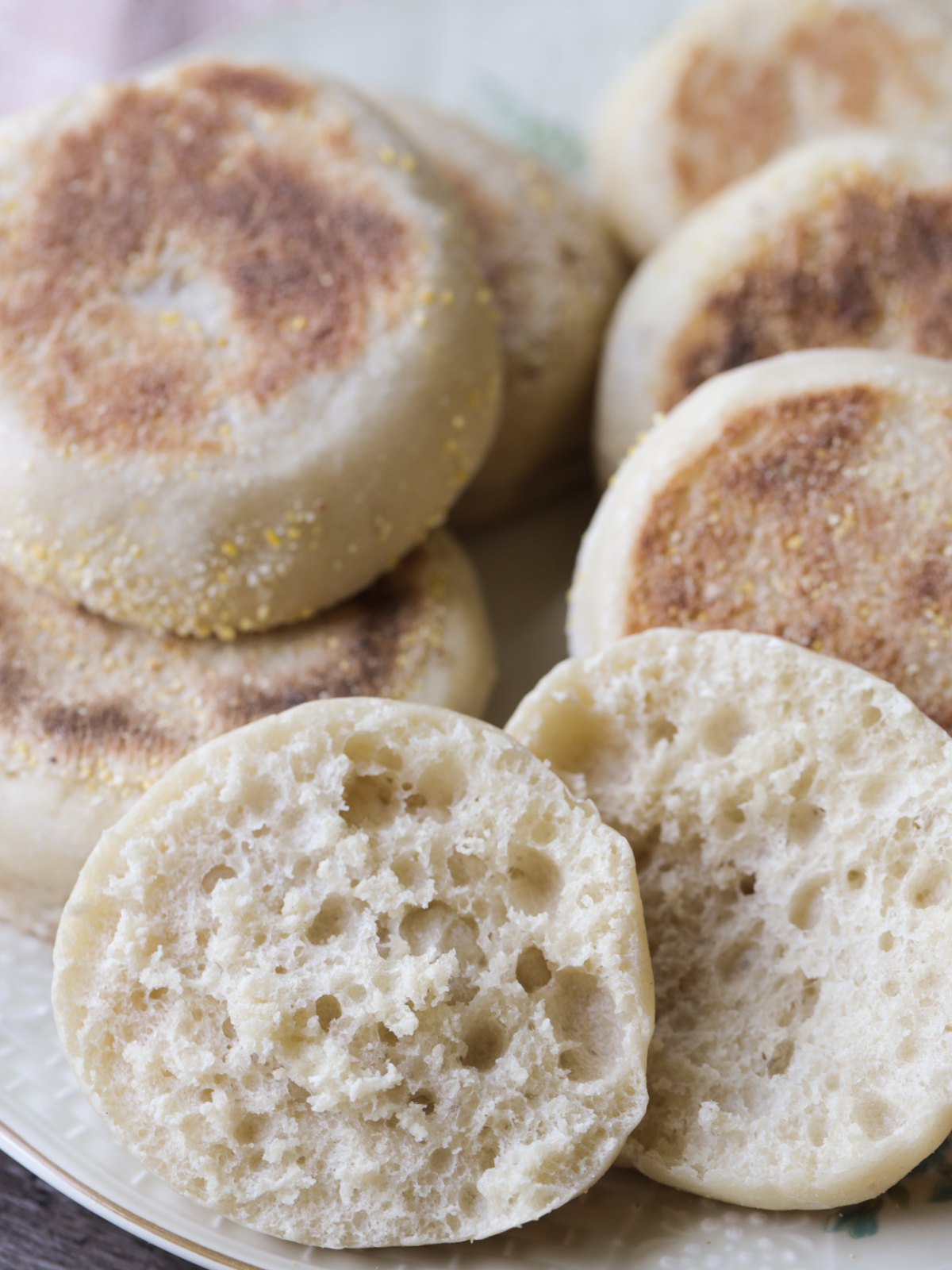
I have been working on perfecting my sourdough English muffin recipe for a while now. So when I finally got this recipe down to *exactly* what I was hoping for, there may have been a celebratory dance in my kitchen.
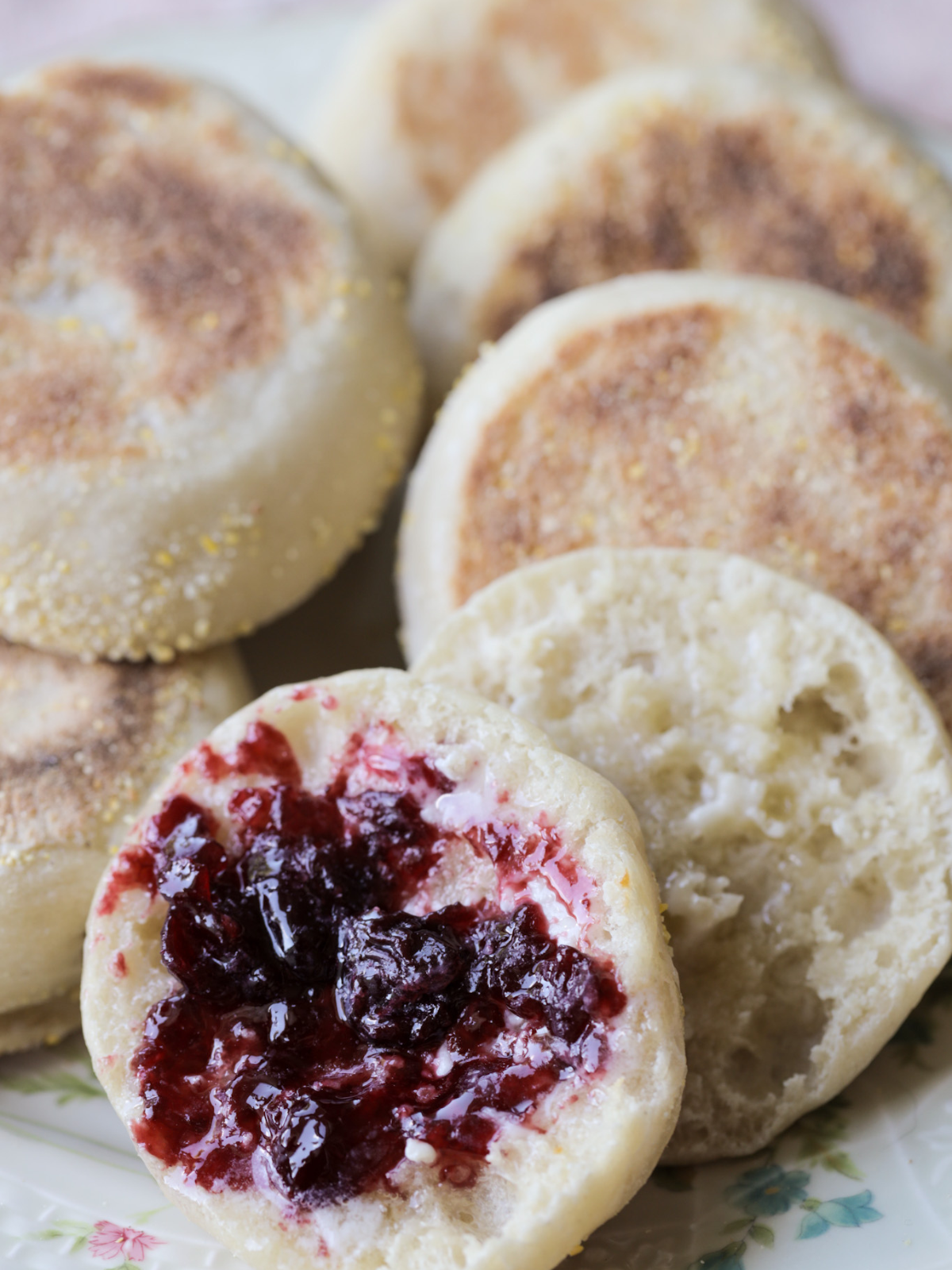
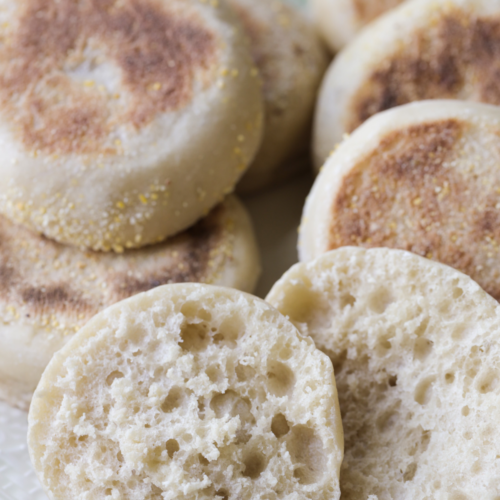
This recipe is everything you want in an English muffin. Naturally fermented, 100% sourdough. The perfect texture of nooks and crannies to fit the melty butter, warm honey, or sweet jam. Absolutely lovely for breakfast sandwiches or oooh, eggs benedict!
And they freeze like a charm so you can save for them a time you need them. I love this recipe and I hope you do too!
Why You’ll Love These Sourdough English Muffins
- Easy to make. With simple ingredients and a straightforward process, these homemade English muffins are perfect for both beginner and experienced sourdough bakers.
- Naturally leavened. Made with an active sourdough starter, these English muffins develop incredible flavor and a beautifully soft texture without any commercial yeast.
- Perfectly fluffy. They’re soft and airy on the inside with a lightly crisp, golden crust that becomes even better after toasting!
- Full of nooks and crannies. Split them open with a fork to reveal those classic pockets that are perfect for catching melted butter, jam, or honey.
- Great for making ahead. I love to make a double batch of these and freeze the second batch!
More Sourdough Breakfast Recipes
- sourdough donuts with chocolate custard filling
- sourdough blueberry lemon fritters
- sourdough strawberry cheesecake sweet rolls
- sourdough cherry almond cream cheese buns
- sourdough pecan sticky buns
Step-By-Step Instructions
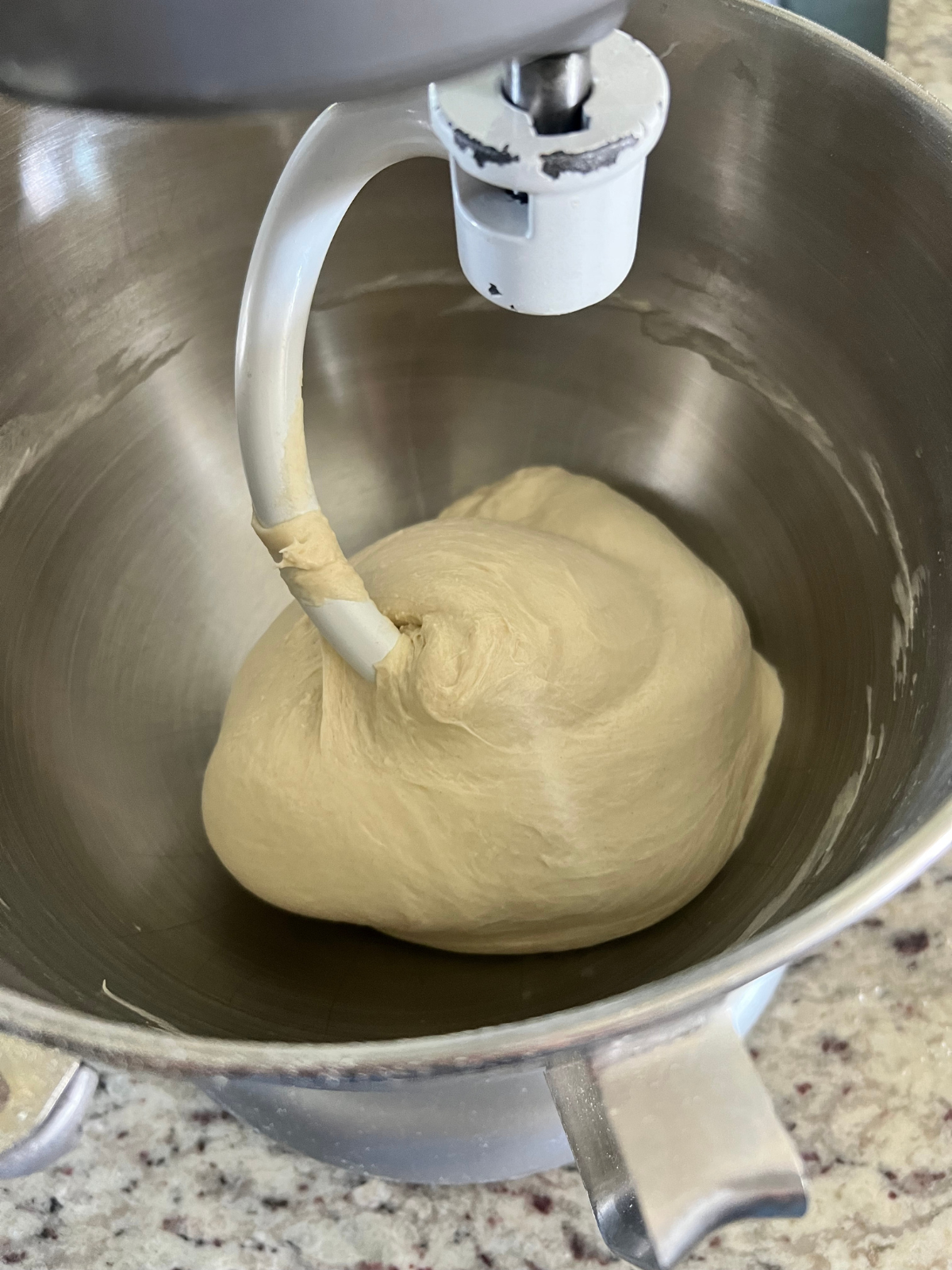
Add the sourdough starter, water, milk, honey, bread flour, and salt to the bowl of a stand mixer. Knead with the dough hook for 7–10 minutes until the dough is smooth and elastic.
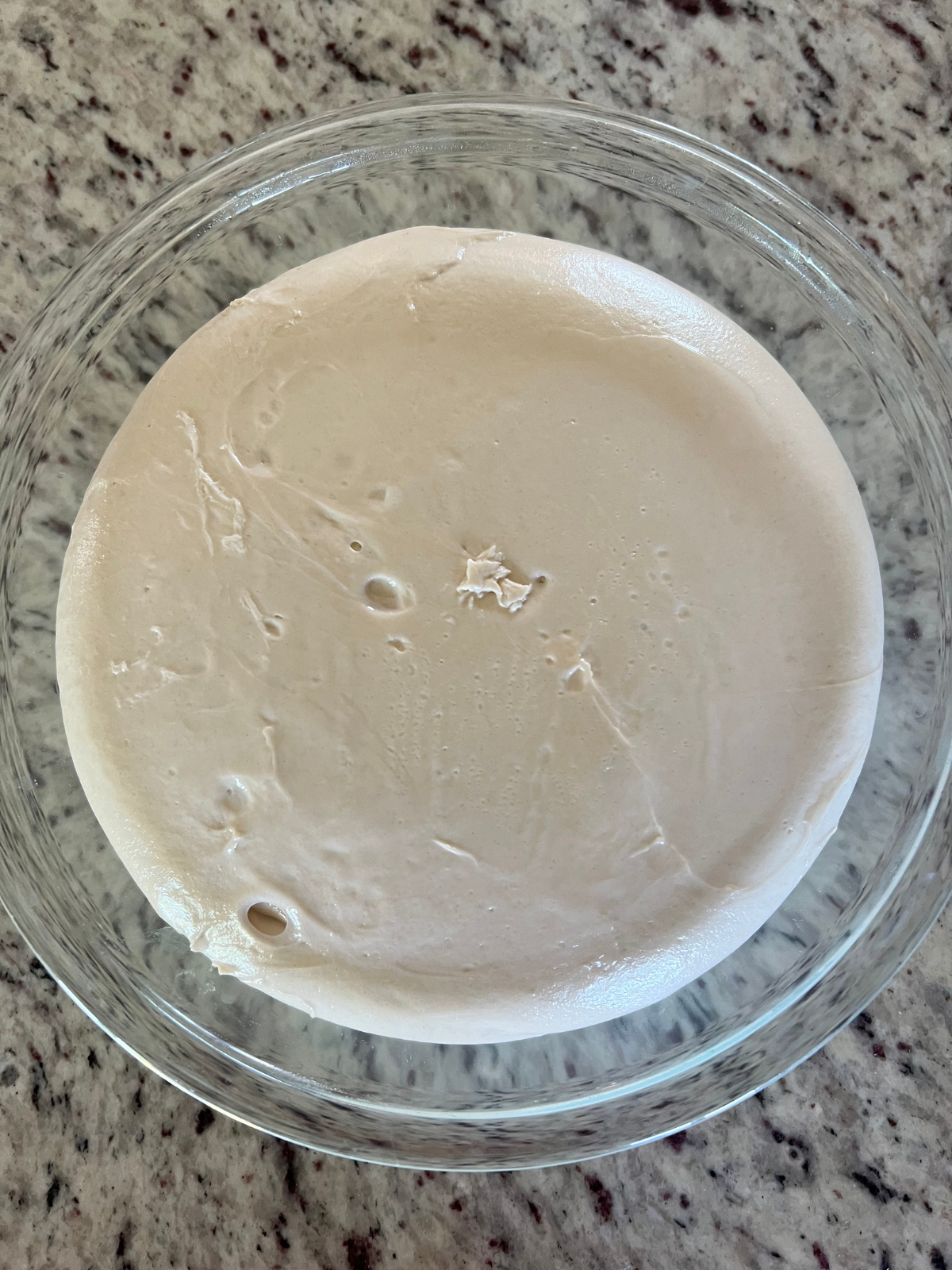
Cover the bowl and let the dough bulk ferment for 6–10 hours, or until it’s noticeably domed with bubbles on the sides of the bowl. Remember—watch the dough, not the clock, since every kitchen is a little different.
For even better flavor and easier handling, pop the dough in the fridge overnight. If you’re baking the same day, you can move right on to shaping. Make it work for your schedule!
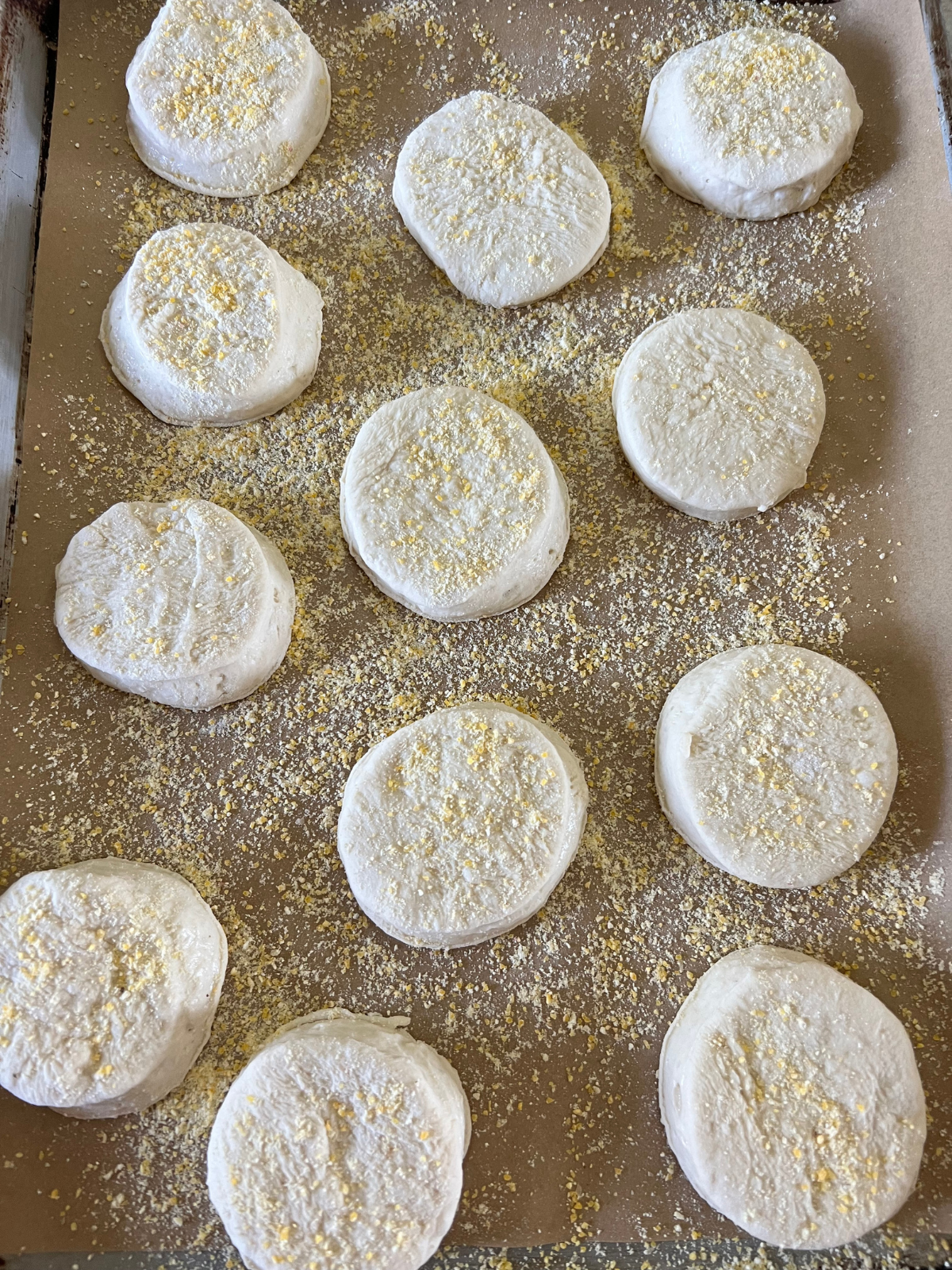
Roll the dough out to about 1 inch thick and use a biscuit cutter to cut out rounds.
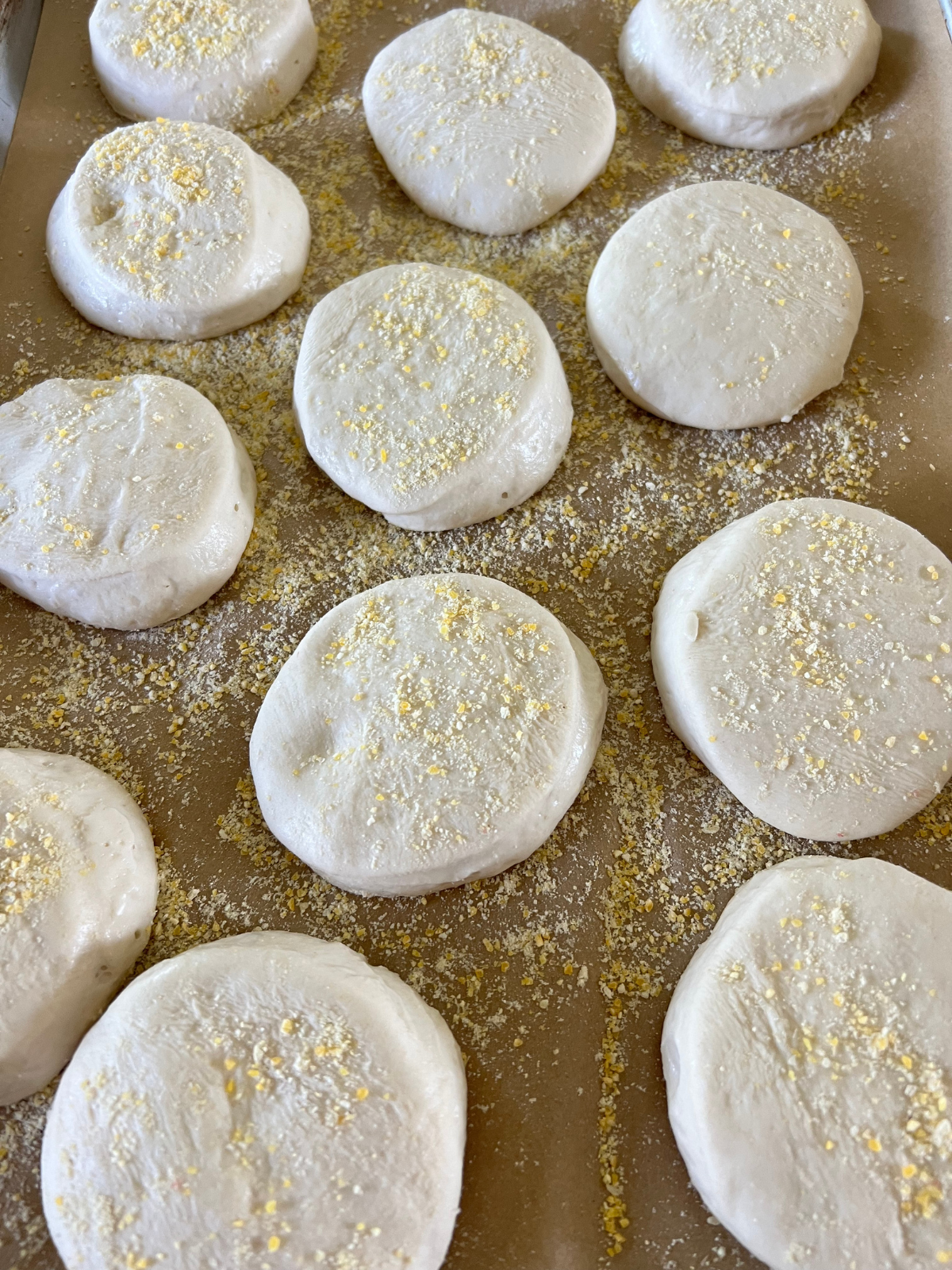
Place the rounds on a parchment-lined baking sheet dusted with cornmeal or semolina. Sprinkle a little more on top, cover, and let them rise for another 2–4 hours.
They’re done when they have puffed up and expanded.
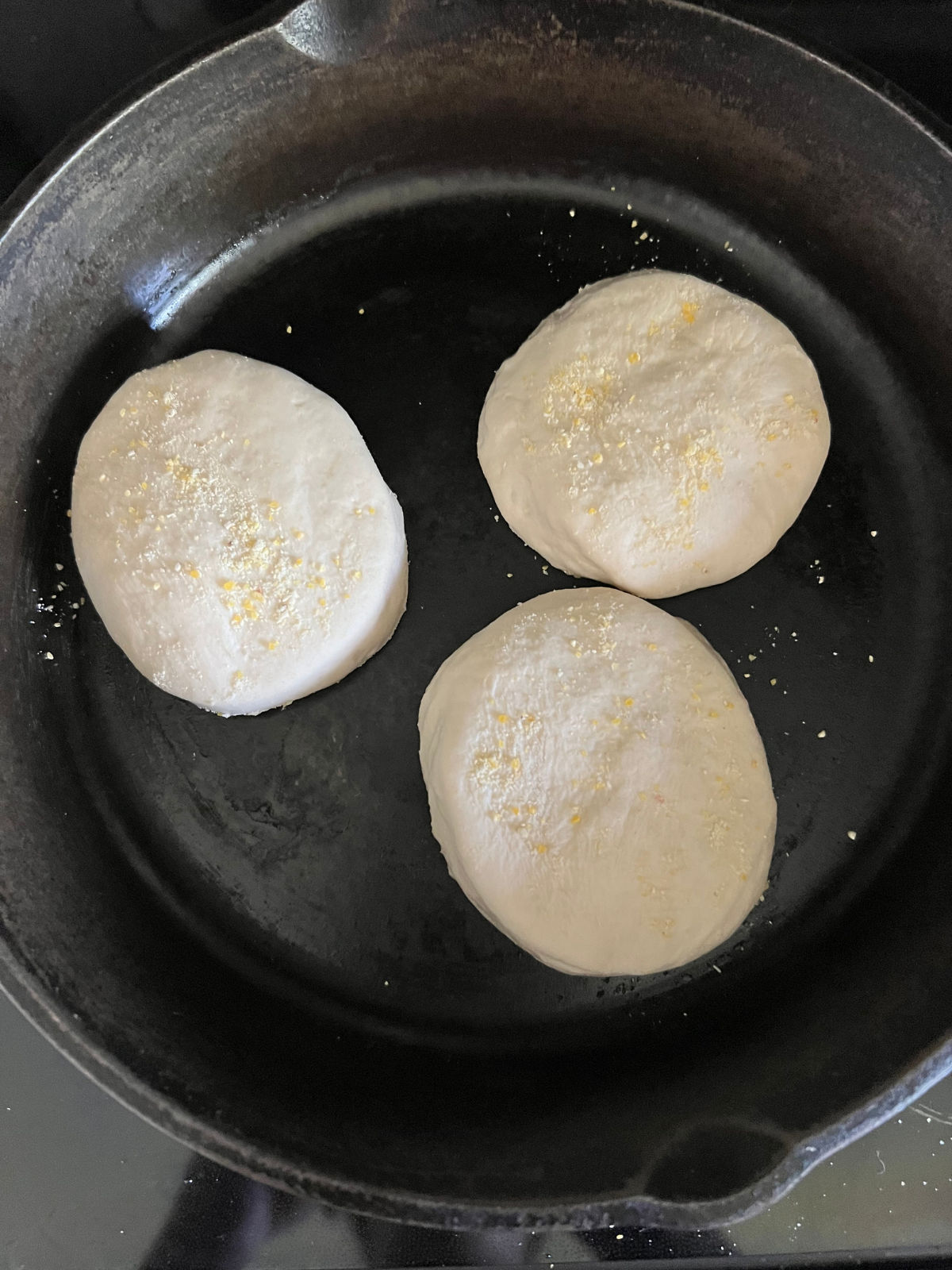
Cook the English muffins on a skillet over low heat for about 4–5 minutes per side. Cover the pan while the first side cooks, then remove the lid after flipping.
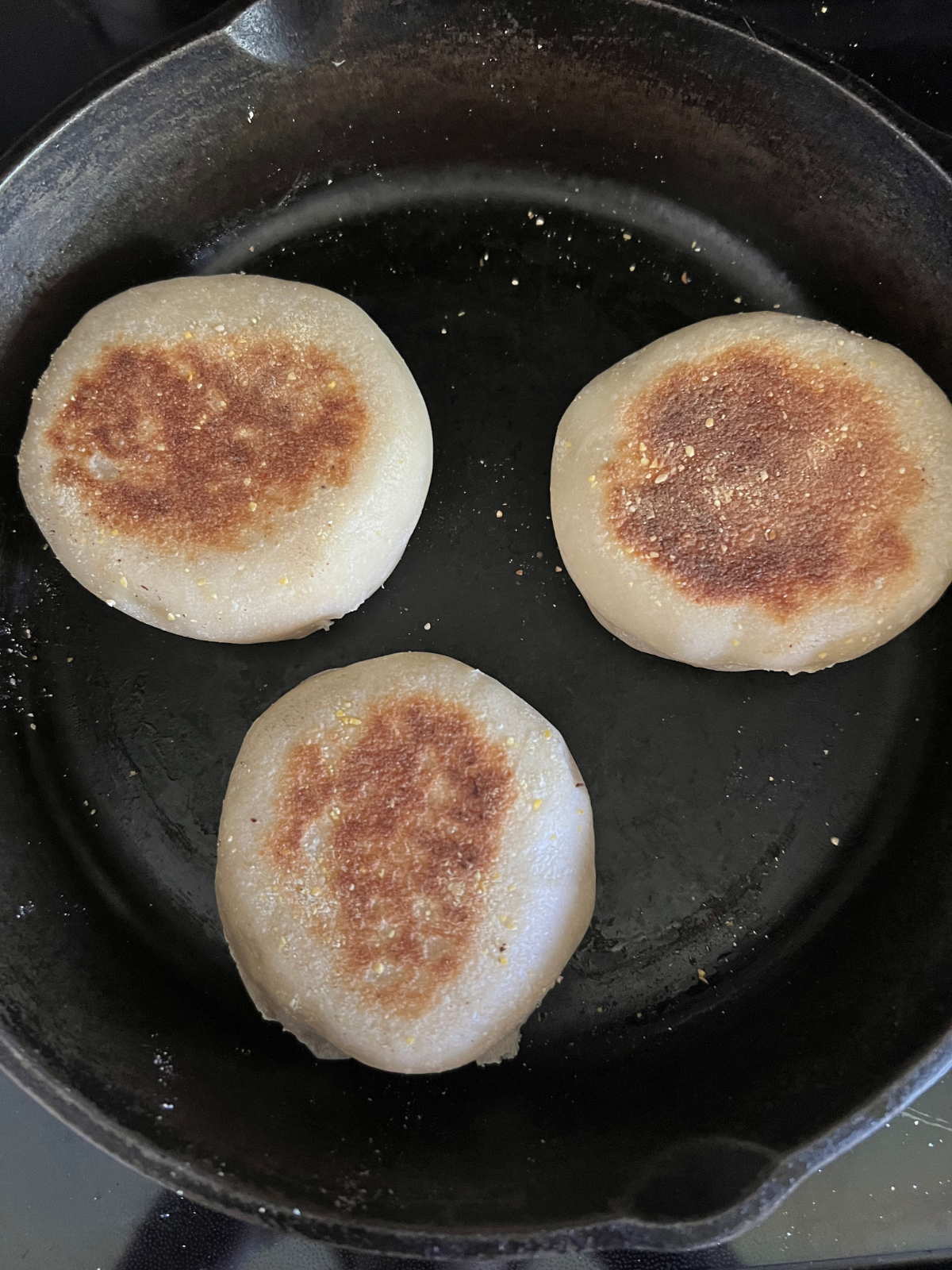
They’re done when the centers reach 200–205°F. Be sure to brush away any extra cornmeal between batches so it doesn’t burn.
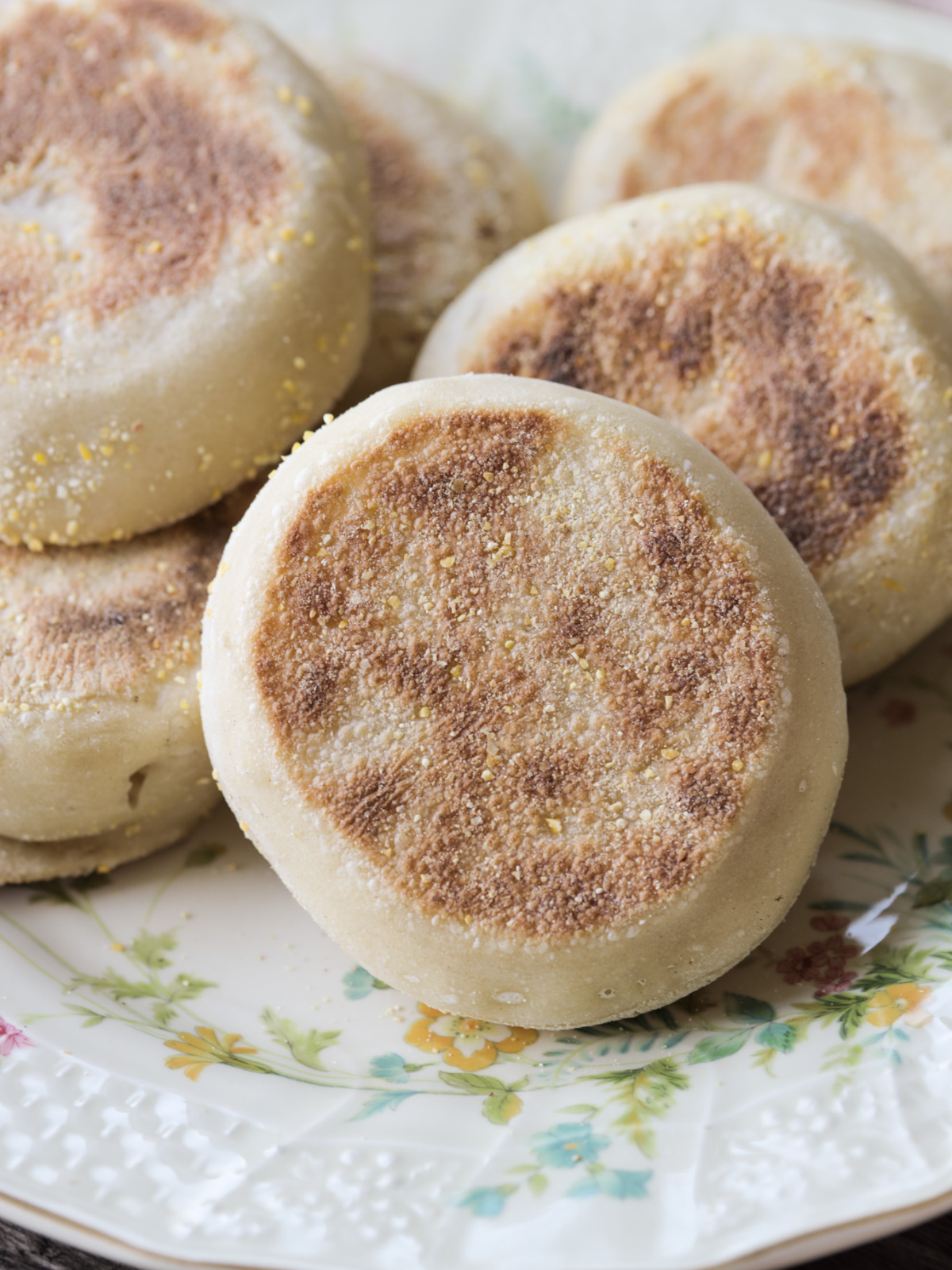
Tips for The BEST Sourdough English Muffins
- Use an active starter. Your starter should be bubbly, active, and at or near its peak for the best rise.
- Watch the dough, not the clock. Fermentation times vary greatly depending on your home’s temperature.
- Cook low and slow. Resist turning up the heat. Cooking too quickly can brown the outside before the center is fully cooked.
- Check the internal temperature. A thermometer is the easiest way to ensure perfectly cooked English muffins.
- Dust generously. Cornmeal or semolina gives English muffins their classic texture and prevents sticking.
Equipment
- Stand mixer with dough hook
- Large mixing bowl
- Rolling pin
- 3-inch biscuit cutter
- Parchment paper
- Baking sheet
- Large skillet or cast iron griddle with lid
- Instant-read thermometer
Storage
Store cooled English muffins in an airtight container at room temperature for up to 4 days.
For longer storage, freeze them in a freezer-safe bag for up to 3 months. Thaw at room temperature or toast directly from frozen.
More sourdough recipes
Sourdough English Muffins
Ingredients
- 100 g active sourdough starter about ½ cup
- 300 g water room temperature (about 1¼ cups)
- 50 g whole milk about 3½ tablespoons
- 20 g honey about 1 tablespoon
- 500 g bread flour about 4 cups + 2 tablespoons
- 10 g fine sea salt about 1¾ teaspoons
- Cornmeal or semolina flour for dusting
Instructions
Mix the Dough
- In the bowl of a stand mixer, combine the active sourdough starter, water, milk, and honey. Stir briefly until the starter is mostly dissolved.
- Add the bread flour and salt.
- Using the dough hook attachment, knead on medium-low speed for 7–10 minutes, or until the dough becomes smooth, elastic, and pulls away from the sides of the bowl. The dough should be soft and slightly tacky but not overly sticky.
Bulk Fermentation
- Transfer the dough to a lightly greased bowl and cover.
- Allow the dough to bulk ferment for 6–10 hours.
- The exact timing will depend on the temperature and humidity of your kitchen. Rather than watching the clock, watch your dough. It should become noticeably puffy, feel airy, and increase in volume by about 50–75%.
Cold Ferment (Optional but Recommended)
- For the best flavor and easier handling, place the covered dough in the refrigerator overnight.
- If you’d rather continue the same day, you can move directly on to shaping after bulk fermentation.
Shape the English Muffins
- Turn the dough onto a lightly floured work surface.
- Roll it out to approximately 1 inch (2.5 cm) thick.
- Using a biscuit cutter, cut out rounds, pressing straight down without twisting the cutter.
- Place each round onto a parchment paper-lined baking sheet that has been generously dusted with cornmeal or semolina flour. Sprinkle additional cornmeal or semolina over the tops of the muffins as well.
- Cover loosely with plastic wrap.
Second Rise
- Allow the English muffins to rise for 2–4 hours, or until they appear puffy and have expanded slightly.
- Again, the exact timing will vary depending on the warmth of your kitchen.
Cook
- Preheat a cast iron skillet or heavy-bottomed skillet over low heat.
- Carefully transfer the muffins to the skillet, leaving space between each one.
- Cover with a lid and cook for 4–5 minutes on the first side.
- Flip each muffin, remove the lid, and cook for another 4–5 minutes on the second side.
- The English muffins are done when the centers reach an internal temperature of 200–205°F (93–96°C).
- Between batches, brush or wipe away any excess cornmeal or semolina that remains in the skillet. This prevents it from burning and sticking to the bottoms of the next batch of muffins.




There is no other classic sourdough English muffin recipe you need once you find this one! We love these sourdough English muffins so much, and I think you will too! Let me know what you think if you make them!
Could you roll the dough into ball and flatten instead of rolling it out and using a cutter?
Yes, you sure can!
Taste ok but did not hold their shape. I refrigerated overnight to help. They were hard to cut, hard to stay in shape, hard get off parchment. Overproofed maybe?
Sounds like you overproofed them, Michelle! This is a simple dough to work with when it’s proofed just right. So sorry it didn’t work out for you!
For the refrigeration are you placing the dough in the refrigerator after letting it proof on the counter for the 6-10 hours. Or are you placing the dough right in the refrigerator to cold proof over night after mixing her up?
I let it bulk ferment for that 6-10 hours (or until the dough gets to about 50% bigger in size) and then place it in the fridge just because that’s how timing works for me and it helps add more flavor (plus easier to shape). The dough can sit in the fridge for 8-24 hours. Then you would take out, shape, and let them have a second rise! 🙂
I think I over proofed these because the dough was extremely hard to work with, but I’m not really sure cuz I’m very new to sourdough. Is that normal for English muffins? They were crazy sticky and hard to cut into rounds. But they taste great!
Oh no, I’m so sorry! No, the dough should not be super sticky. So I would guess they were overproofed. I put an estimated bulk fermentation time in all my recipes, but I always recommend watching the dough, not the clock, because everyone’s kitchen temperature, humidity, strength of starter, percentage of starter hydration, etc is so different.
I have not made anything with my starter yet, for bulk fermentation- what do you look for when it’s done – doubled in size?? Anything else?
So if you’ve got a glass bowl or container, that will help a lot! You’ll be able to see bubbles throughout the sides and bottom of the bowl. The dough will be about doubled in size, the top will be domed and bubbly on top. If you give the bowl a little shake, it will jiggle. Good luck! Hope it goes well, Jen!!
Can I let it sit in refrigerator longer due to I’m not going to have time to shape and let it rise the second time?
100%, yes! Let it work for your schedule!